By Dr. Daniel Golshani
Best Beverly Hills Rhinoplasty: Use Consultation Criteria, Not Unverified Rankings
- Do not treat “best” as a verified provider claim unless a transparent, relevant comparison method supports it; use consultation quality criteria instead.
- A rhinoplasty consultation should address your motivations, expected outcome, and whether those expectations are realistic.
- Ask how nasal airway obstruction, health conditions, medications, and prior nasal surgery will be considered.
- Before deciding, make sure you understand possible breathing effects, complications, discomfort management, recovery expectations, and the possible need for future nasal surgery.
Because no evidence identifies the best Beverly Hills rhinoplasty provider, use a consultation with Dr. Daniel Golshani to discuss your reasons for rhinoplasty, realistic outcomes, nasal breathing, complications, and the possibility of future nasal surgery. The consultation should not be used to support a ranking claim.
A rhinoplasty consultation should cover your appearance goals, their feasibility, health factors that could affect or prevent surgery, nasal airway obstruction, recovery and discomfort management, possible breathing changes, complications, and the potential need for future nasal surgery. Bring your goals, breathing concerns, medical history, and recovery questions so a Beverly Hills consultation can address both appearance and function.
Consultation Coverage Checklist for First-Time Patients
Before the consultation, note your desired nasal changes, goals, expectations, health conditions, breathing concerns, medical history, medications, and any previous nasal surgery. Discuss your motivations, whether your expectations are realistic, the internal nasal examination, and example images; ask how the findings affect your options and what limitations they create.
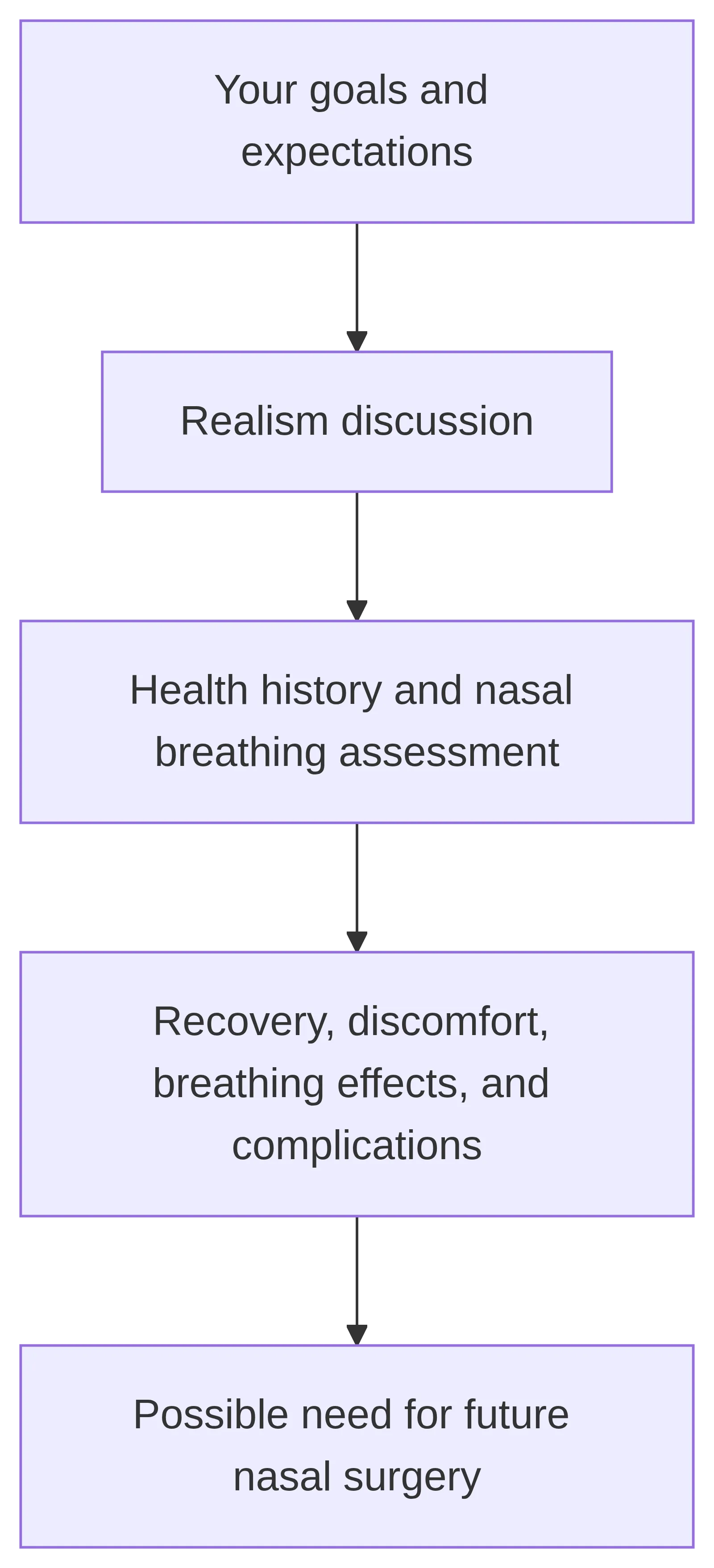
Before deciding, discuss recovery, breathing changes, complications, discomfort management, possible future nasal surgery, expected benefits and limits, risks, and follow-up questions.
Questions and Limits Before You Decide
For a nervous first-time patient, bring these questions to the rhinoplasty consultation:
- How will you assess my nasal airway and breathing, and could the plan affect breathing afterward? Preoperative assessment should include evaluation for nasal airway obstruction, and candidates should be informed about possible effects on nasal breathing.
- What changes are realistic for my motivations and expectations, and how will we document that discussion? Clinical guidance recommends discussing whether desired outcomes are realistic and documenting the conversation.
- What complications, discomfort-management strategies, and recovery expectations should I plan for? Before surgery, candidates should be educated about postoperative expectations, potential complications, and strategies for managing discomfort.
- Could I need future nasal surgery, and how would that possibility affect my decision? The possibility of future nasal surgery should be discussed.
- Which approach are you considering, and why? Rhinoplasty can be performed through open or closed approaches. The supplied evidence describes the open approach as involving an incision at the base of the nostrils and the closed approach as having no external incision. It does not establish that either approach is universally preferable, so the reason for recommending one should be specific to the proposed plan.
Also share your medical history and health concerns; a consultation may include reviewing them alongside your goals, facial anatomy, and breathing.
Before rhinoplasty, discuss goals, expectations, nasal obstruction, health conditions, breathing changes, complications, discomfort management, and possible future surgery; document satisfaction with nasal appearance and function at least 12 months later. A provider page is not independent outcomes evidence, and the supplied evidence neither compares Beverly Hills providers nor supports calling any provider the “best.”
Leave a Reply