
A Revision Guarantee Is Meaningful Only in Writing
Before comparing detailed terms, run a simple pre-consultation screen. Ask whether the surgeon is board-certified, then request the complete current policy in writing.
First, check whether the provider has stated a revision policy at all. Next, identify whether any separate document describes the proposed implant warranty. Finally, ask what routine follow-up the practice plans to provide.
Record each answer separately. Mark missing, verbal, or outdated information as unconfirmed. This screen helps you decide what to clarify before scheduling or moving forward.
A written policy still does not predict your result. It cannot determine whether you will need revision surgery. It also cannot establish whether revision would be clinically appropriate, approved, or available for your situation. Those questions require an individualized discussion with a qualified surgeon.
Use the three separate records to prepare for that discussion: the provider policy, the manufacturer warranty, and the follow-up plan.
Keep Provider Policy, Implant Warranty, and Follow-Up Separate
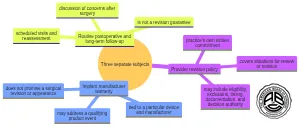
Treat these as three separate columns in your notes.
Provider revision policy. This is the practice’s own written commitment. It may describe situations in which the practice will review a concern or consider revision. Its terms may include eligibility rules, exclusions, timing limits, documentation, and decision authority. A provider policy is not the same as a manufacturer warranty.
Implant manufacturer warranty. This is tied to a particular device and manufacturer. It may address a qualifying product event, such as rupture or deflation. It does not automatically promise a surgical revision, a particular appearance, or every expense connected with care. The proposed implant and current warranty document control.
Routine postoperative and long-term follow-up. This describes care and surveillance after surgery. It may include scheduled visits, reassessment, and discussion of concerns. Follow-up is not a revision guarantee. A plan to monitor you does not mean revision will be needed, offered, or approved.
Write each answer in its own column. If a representative blends two columns, ask them to separate the terms. That simple step can reveal whether a statement describes product protection, clinical care, or a provider commitment.
A consent-framework article recommends asking what postoperative and long-term implant surveillance a practice plans to provide. Use that question alongside the policy questions. Keep the answers distinct.
Why You Should Ask About Possible Future Surgery
Asking about revision does not mean you expect a problem. It means you are considering the full scope of implant surgery.
Breast revision surgery may address scarring or revise the implant pocket to improve breast shape. Breast appearance can also change after pregnancy, nursing, weight changes, aging, or gravity. These changes may occur independently of a provider’s policy.
Implant surgery may not be a one-time procedure. Breast implants are not lifetime devices. Future implant surgery may be needed for replacement or removal. Ask how the provider discusses that possibility before you proceed.
Also ask what changes may remain if implants are later removed. Some breast changes after augmentation may not be reversible.
The goal is not to predict revision. The goal is to understand the policy boundary before surgery. A clear answer should tell you what the policy addresses. It should not imply that revision is inevitable or guaranteed.
Read a Provider Revision Claim Before You Rely on It
Read a revision claim as a starting point for one conversation. Do not treat it as a complete promise.
Begin with the exact words used in the claim. Then ask the provider to explain what those words mean. A claim may describe a review of a concern. It may describe a clinical assessment. It may describe possible revision in limited circumstances. Those are different statements.
Use this reading path.
First, identify the stated concern.
- What concern does the claim name?
- Does it mention scarring, implant position, or an implant pocket?
- Does it describe a complication, an appearance concern, or neither?
- Does it say what the practice will do first?
Next, identify the limits.
- Which situations does the statement exclude?
- Does it address changes after pregnancy, nursing, weight changes, aging, or gravity?
- Does it apply after surgery by another provider?
- Does later surgery change the stated terms?
Then, identify the individual decision.
- Who evaluates a concern?
- What examination or records inform that evaluation?
- How will the surgeon consider your anatomy and health history?
- What alternatives might be discussed?
Request the complete current terms in writing only after you understand these questions. Confirm the document date, eligibility conditions, exclusions, timing, documentation, and who decides whether the terms apply.
Clinical appropriateness depends on the reason for surgery, implant type, and your health history. A medical-policy source distinguishes clinically indicated implant procedures from procedures sought mainly for aesthetic change. That distinction is not an individual coverage decision. It explains why a general claim cannot replace a surgical assessment.
If a provider cannot explain a term, leave that point open for consultation. Do not turn missing details into an assumption.
Identify the Separate Implant-Warranty Questions
Move from a provider claim to a separate device conversation. A manufacturer warranty concerns a particular implant and its current terms. It does not answer whether revision would be clinically appropriate.
Start by identifying the proposed device. Ask for the manufacturer, model, fill type, current patient brochure, and current warranty document.
Then ask the manufacturer questions in order.
What event is described?
- Does the document address rupture, deflation, or another listed event?
- What makes that event qualify?
- What information confirms it?
What support is described?
- Does the document describe a replacement implant?
- Does it describe support connected with a qualifying event?
- What support does the document not describe?
What conditions apply?
- What time limits apply?
- What eligibility rules apply?
- Who submits required materials?
- Which records, tests, or implant details are needed?
- Would a later implant exchange affect the terms?
Current MENTOR materials show why these questions matter. They describe replacement implants for qualifying rupture or deflation. They also describe additional support for certain qualifying events within stated periods. Those terms are device-specific and date-sensitive. Confirm the current documents for the exact implant discussed with you.
Review current implant labeling with your surgeon, including long-term complications and BIA-ALCL information. Ask for time to read the proposed implant brochure before deciding.
If the proposed device changes, restart this device conversation with updated materials. Do not carry an assumption from one implant to another.
Map the Follow-Up Conversation Separately
Follow-up is a third conversation. It concerns how the practice will receive and assess a concern after surgery. It is not a promise about revision.
Ask the practice to describe the follow-up path from surgery through later implant questions.
Start with planned care.
- Who provides postoperative visits?
- Which visits are planned after surgery?
- How will you receive instructions and appointment details?
- Which records will you receive and keep?
Then ask how concerns reach the team.
- How should you contact the practice between visits?
- Who responds to a change in shape, position, scarring, or discomfort?
- What information should you provide?
- When should you request reassessment?
Finish with longer-term communication.
- What long-term implant surveillance does the practice plan to provide?
- Who discusses implant questions after routine visits end?
- How can you request implant details or medical records later?
- What questions should you bring to your usual clinician?
A cited consent framework recommends postoperative surveillance through suture removal and ideally while an implant remains in place. That is a framework recommendation. It does not show that any practice provides a particular schedule.
Record the practice’s actual answer in plain language. A follow-up path can clarify whom to contact. It cannot predict a diagnosis, revision, approval, or result.
Use a Question Path Before You Schedule
Use this path before scheduling or moving forward. It is not a post-consultation policy audit. Its purpose is to show which conversation you still need.
Identify a provider claim.
If yes, clarify what concern it addresses, what limits apply, and who makes an individualized decision. Request the current written terms after the provider explains the claim.
Check for a device statement.
If yes, identify the exact proposed implant. Request its current brochure and manufacturer warranty. Clarify which qualifying event, conditions, and time limits the document describes.
Separate a follow-up statement.
If yes, confirm who provides care, how concerns are reported, and how long-term implant questions are handled.
Test whether terms were blended.
A manufacturer document covers device terms, while provider-policy questions require the practice’s written answer. A follow-up visit describes care after surgery, not warranty terms. Whether a revision is needed or appropriate requires an individualized clinical assessment.
List what remains open.
Write only the unresolved question. For example: “Who decides whether this provider term applies?” or “Which current warranty applies to my proposed implant?” Bring that question to the surgeon.
This path helps you avoid relying on a broad guarantee phrase. It does not choose a provider. It does not establish medical necessity, coverage, eligibility, approval, or a specific outcome.
Questions to Bring to Your Breast Augmentation Consultation
Bring your worksheet to the consultation. Have the surgeon explain each answer in plain language.
Discuss your goals
- What change are you seeking?
- What limits does your anatomy place on that goal?
- How will you evaluate proportion, shape, and symmetry?
- What alternatives should you consider?
Clarify the proposed implant
- Which manufacturer, model, size, and fill type are you proposing?
- Why does that device fit my goals and health history?
- May I receive the current product brochure?
- What long-term complications should I understand?
- Which warranty terms apply to this exact device?
Explore possible future surgery
- Why might someone later need implant surgery?
- How could scarring or an implant pocket affect a revision discussion?
- What changes may follow pregnancy, nursing, weight change, aging, or gravity?
- What changes may remain if implants are removed?
- How would you evaluate a concern before discussing revision?
Request provider-policy details
- May I receive the complete current revision policy?
- What does it cover?
- What does it exclude?
- What conditions must I meet?
- What time limits apply?
- Who decides whether it applies?
- What documentation must I provide?
- Does the policy promise evaluation, revision, or something narrower?
Confirm follow-up arrangements
- Who will provide my routine postoperative care?
- How long will planned follow-up continue?
- What long-term surveillance do you recommend?
- How should I report a concern?
- Which records will I receive?
Fully informed consent should come from direct discussion with your surgeon. Use the consultation to discuss risks, benefits, alternatives, and unanswered policy terms. Request time to review the written materials. Do not make a decision based on a guarantee phrase alone.
Your health history and surgical goals may change the answer. Let the surgeon explain what requires individualized assessment. Keep those clinical answers separate from the provider’s general policy language.
Use Written Terms to Make a Clearer Decision
Before moving forward, collect three items: the current provider revision policy, the current warranty for the exact proposed implant, and the practice’s written follow-up plan.
Compare them in separate columns. Confirm scope, eligibility, exclusions, timing, decision-maker, documentation, and update date. Mark every unanswered term. Then discuss the open questions with the surgeon.
This process does not predict whether revision will be needed. It does not establish eligibility, approval, medical necessity, coverage, or a specific outcome. It gives you a clearer basis for an informed consultation decision.
Use the written-terms checklist to organize your questions before consultation.
Frequently Asked Questions About Revision-Guarantee Claims
What should you ask for before trusting a revision policy claim?
Ask for the current written policy. Get the date, scope, exclusions, timing, and decision-maker.
How is a provider revision policy different from an implant warranty?
A provider policy is the practice’s own terms. A warranty comes from the implant manufacturer.
What should a breast implant warranty usually confirm?
Confirm the exact device, the covered event, eligibility rules, time limits, and required records.
Why does routine follow-up matter when you compare providers?
Follow-up shows how the practice monitors you. It does not promise revision or a specific result.
What should you do if the written answer is vague?
Mark it as unconfirmed. Ask again in writing before you decide.
Can a revision policy tell you whether revision will be approved?
No. Approval depends on the actual terms and your individual clinical situation.
What questions help you compare consultations on the same terms?
Ask about goals, implant choice, eligibility, exclusions, timing, documentation, and follow-up.
Leave a Reply