Urgent care scope: Minor to moderate, non-life-threatening problems
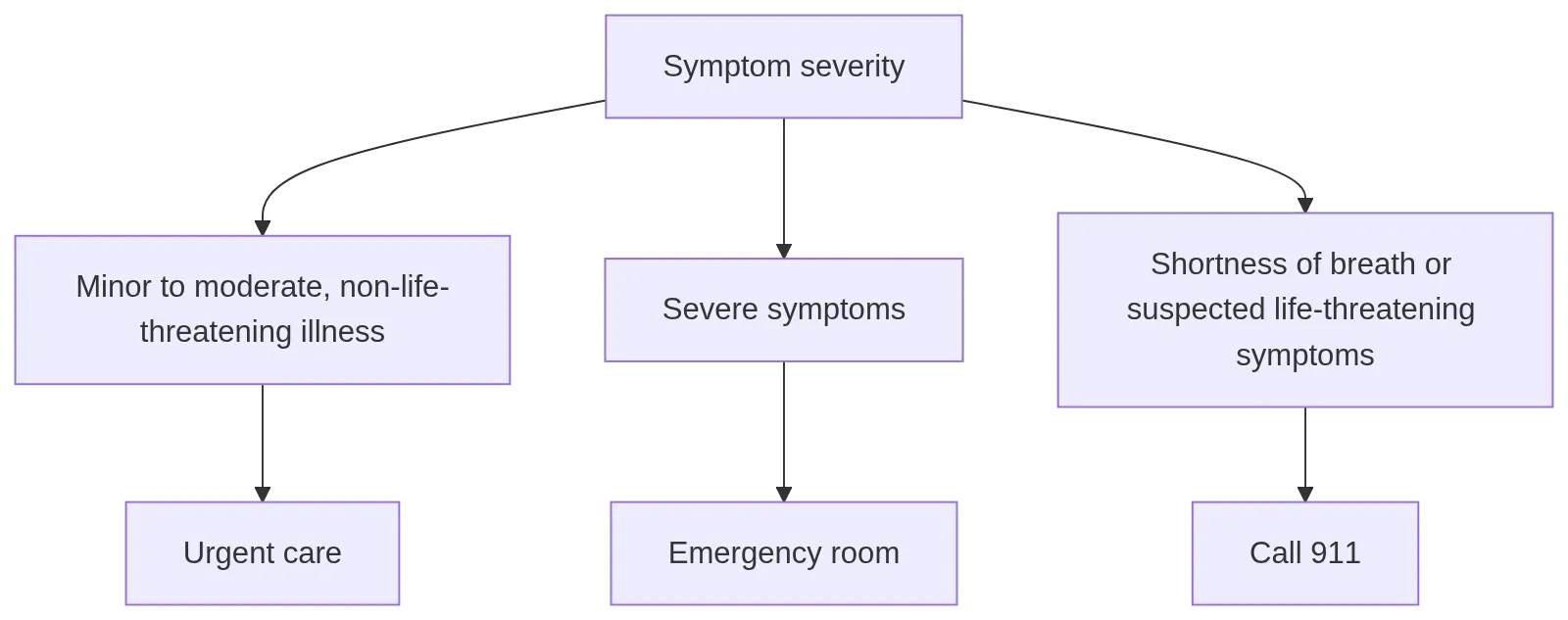
Urgent care fits minor to moderate, non-life-threatening illnesses.
Severe or life-threatening symptoms need emergency care, not urgent care.
Call 911 for shortness of breath or any symptom that may be life-threatening.
Chest pain, severe bleeding, head injury, vision loss, and severe abdominal pain are examples of symptoms that need a conventional emergency department.
ABQ ER & Hospital connects this guidance to emergency evaluation with on-site imaging, cardiac monitoring, and 24-hour laboratory services.
Choosing where to go for sudden symptoms can feel stressful, and you do not have to sort it out alone. Duke City Urgent Care is intended for minor to moderate, non-life-threatening problems. If you have chest pain, stroke symptoms, severe bleeding, a head injury, vision loss, severe abdominal pain, or shortness of breath, seek emergency care at the nearest emergency department; call 911 when symptoms may be life-threatening. Emergency symptoms require prompt professional evaluation.
The supplied location count shows five Duke City Urgent Care locations in Albuquerque and Los Lunas; it shows where clinics exist, not whether they are the right place for a serious symptom or a faster visit.
Emergency warning signs: When urgent care is not enough
If you have chest discomfort, severe pain, or another sudden severe symptom, go to the nearest emergency department; do not treat it like routine urgent care.
Symptom information cannot tell you which diagnosis you have. Emergency symptoms require prompt professional evaluation, especially when breathing trouble or chest pain is involved.
Call 911: Breathing trouble and possible life-threatening symptoms
If you have sudden shortness of breath, call emergency services right away. Suspected life-threatening symptoms belong in the nearest emergency room, not urgent care.
Next step: Match symptom severity to emergency evaluation
If symptoms are minor or moderate, urgent care may fit. If symptoms are severe or possibly life-threatening, choose emergency care now. If you suspect a life-threatening condition, go to the nearest emergency room immediately.
Choose the right level of care
For Albuquerque readers who need emergency evaluation, ABQ ER & Hospital is relevant when symptoms call for an emergency department, not urgent care. Its on-site imaging, cardiac monitoring, and 24-hour laboratory services help assess serious symptoms at the point of care.
Before you choose where to go, ask:
Is this symptom severe enough for an emergency department?
Do I need cardiac monitoring, imaging, or same-day lab testing?
Could this become dangerous if I wait?
If the answer is yes or unsure, call 911 for shortness of breath or go to the nearest emergency room.
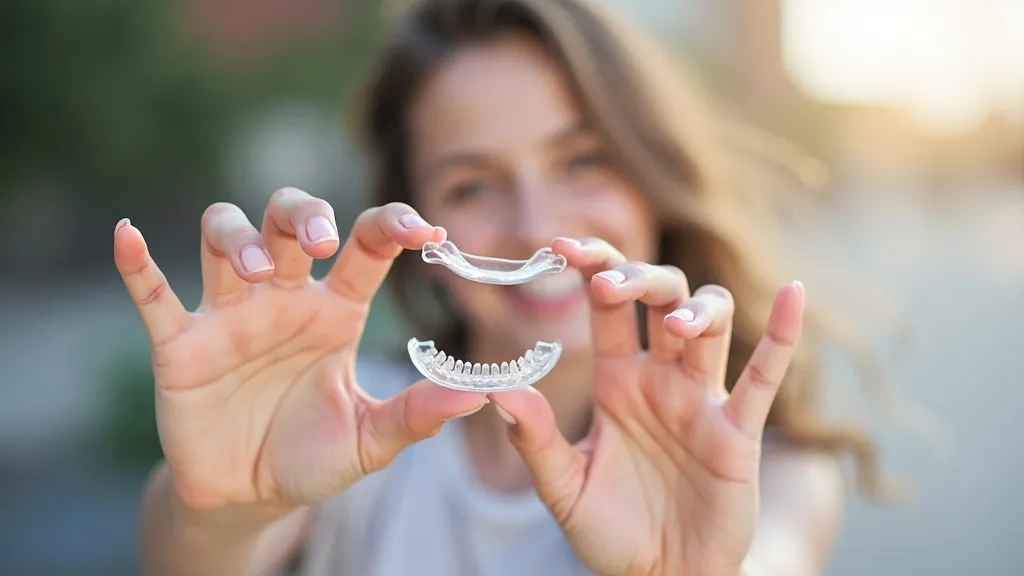
At Park Slope Family Dental, Invisalign and Spark are clear-aligner options that use custom removable appliances to gradually move teeth.
Adults and adolescents may be considered for aligner treatment, but candidacy requires an examination by a licensed dental professional.
Digital scans alone may not show structures below the gumline, so radiographs or other imaging may be appropriate when clinically indicated.
Treatment involves ongoing monitoring and periodic in-practice visits, even when remote check-ins are available.
Patients and parents should compare the evaluation, treatment plan, monitoring, hygiene guidance, and convenience of care rather than assume one brand suits everyone.
Invisalign clear aligners are custom clear plastic trays that gradually move teeth and can be removed. They require an in-person exam because scans and photos alone cannot show everything below the gumline.
For many teens and adults, clear aligners are discreet and often make brushing and flossing easier than fixed braces. Even with remote check-ins, treatment still requires regular monitoring and occasional in-office visits.
Spark and Invisalign: what a fair comparison can show
Spark Clear Aligners and Invisalign are both discreet clear-aligner options, but the right choice depends on your exam, goals, and treatment plan.
concise comparison of what you can compare now
Criterion
Spark Clear Aligners
Invisalign
Type
Clear, removable orthodontic appliance
Clear, removable orthodontic appliance
What the treatment does
Uses a series of custom-made clear plastic appliances to move teeth gradually
Can be used for adults and adolescents when a licensed dentist or orthodontist confirms candidacy
Appearance
Discreet
Discreet
Cleaning and eating
Removable, so brushing and flossing are usually easier than with fixed braces
Removable, so brushing and flossing are usually easier than with fixed braces
Monitoring
Needs ongoing monitoring and periodic in-practice visits
Needs candidacy review and an individualized monitoring plan
Brand-level claims
Material, protocol, and suitability still need case-by-case verification
Suitability still needs case-by-case verification
What you can compare immediately is the treatment style and day-to-day convenience. What you cannot compare honestly from marketing alone is which brand will work better for your bite, crowding, or compliance.
Use the same decision criteria for both Spark Clear Aligners and Invisalign.
Treatment plan: Ask how your teeth will be moved and what the planned aligner process will look like.
Monitoring: Clear aligner treatment still needs periodic in-practice visits, even when remote check-ins are used.
Hygiene: Removable aligners can make brushing and flossing easier, but you still need consistent daily care.
Communication: Choose the option whose instructions you can follow reliably, especially if the patient is a teen.
For children, teens, and adults, the main question is not which brand sounds better. It is which plan fits the individual exam, comfort needs, and follow-through.
Candidacy and treatment expectations for teens and adults
At Park Slope Family Dental in Brooklyn, adults and adolescents can be candidates for Invisalign or other clear aligners, but suitability depends on an in-person exam and the bite you actually have.
Clear aligners are removable, custom-made plastic trays that gradually move teeth. That makes them appealing if you want a discreet option and easier brushing and flossing than fixed braces.
For a parent comparing treatment for a child or teen, the main question is not only appearance. It is whether your child can wear the trays as directed and keep up with cleaning and follow-up visits.
Treatment planning usually starts with an evaluation that may include radiographs or other imaging, because digital scans alone cannot show structures below the gumline. Ongoing monitoring is still needed during treatment, even when remote check-ins are used.
Crowding, bite issues, and growth changes can affect timing, so no one can promise an exact schedule from the keyword alone. The practical decision is whether your family is comfortable with regular wear, periodic visits, and steady home care.
For adolescents, gingivitis can be more likely during aligner treatment than in adults in some research settings, so brushing, flossing, and routine periodontal care matter. That finding does not mean every teen will have that problem.
Clear aligner care is part of a multispecialty dental setting that can include pediatric dentistry, restorative dentistry, orthodontic care, and advanced technology for new patients.
Evaluation and technology: questions to ask before choosing
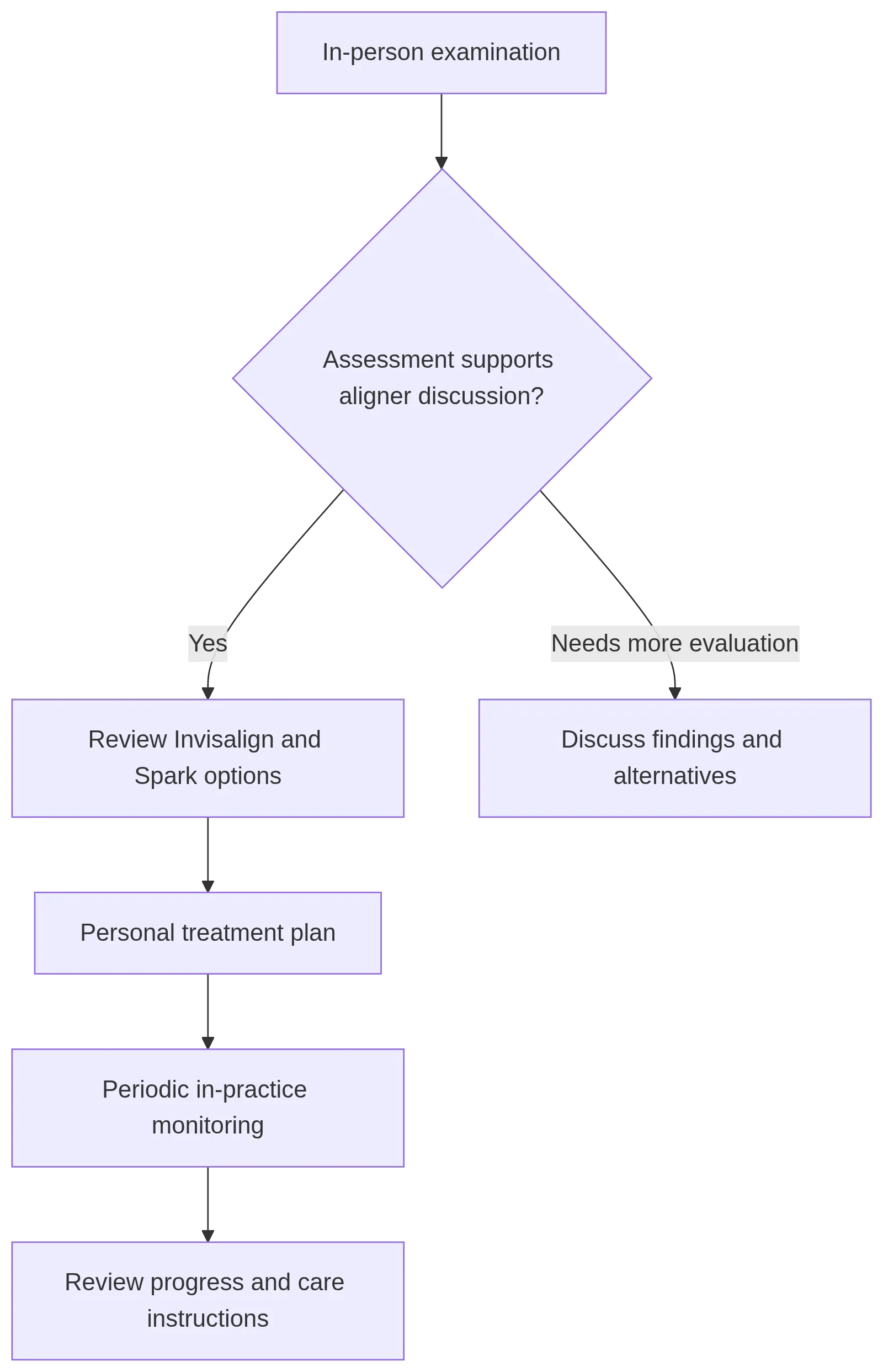
Start with a full in-person examination before choosing Invisalign or Spark Clear Aligners. Ask whether the dentist or orthodontist will review your bite, crowding, spacing, and gum health, then explain whether radiographs or other imaging are needed. Digital scans help planning, but they cannot show what is below the gumline. For children, teens, and adults in Brooklyn, that exam is what determines whether clear aligners are appropriate or whether another orthodontic option fits better. Bring the questions that affect your decision:
What findings make me a candidate for clear aligners?
Will you need X-rays or other imaging in my case?
What alternatives should I consider if aligners are not a fit?
How often will I need in-practice monitoring during treatment?
How to evaluate clear-aligner options
Advanced technology can improve assessment and planning, but it does not guarantee suitability or results. For Brooklyn patients comparing Spark Clear Aligners with Invisalign, digital records can make tooth movement, fit, and treatment steps easier to understand. Scans and software support the plan, but they do not replace the clinician’s evaluation or periodic visits. Teens may also need closer gum-health monitoring during aligner treatment because adolescent gingivitis can be more likely. Use technology as part of the decision, not the decision itself.
Park Slope consultation: turning comparison into a plan
Start by bringing the questions that shape a clear-aligner plan for your child, teen, or yourself.
What are the main goals: straighter front teeth, bite changes, or crowding relief?
Are Spark Clear Aligners and Invisalign both reasonable for this case?
What will treatment require day to day, including wear time, cleaning, and storage?
How often will monitoring visits happen, and will remote check-ins be used?
What dental history matters here, such as gum health, restorations, or missing teeth?
If this is for a teen, what habits or schedule issues could affect consistency?
Clear aligner treatment is removable and usually depends on consistent wear and follow-up visits. That makes the consultation useful for comparing comfort, convenience, and the amount of oversight your case may need. A digital scan helps planning, but it does not replace the exam that looks below the gumline.
Start with a full in-person examination at Park Slope Family Dental before choosing Invisalign or Spark Clear Aligners. Ask whether the dentist or orthodontist will review your bite, crowding, spacing, and gum health, then explain whether radiographs or other imaging are needed. For children, teens, and adults in Brooklyn, that exam is what determines whether clear aligners are appropriate or whether another orthodontic option fits better. Bring the questions that affect your decision:
What findings make me a candidate for clear aligners?
Will you need X-rays or other imaging in my case?
What alternatives should I consider if aligners are not a fit?
How often will I need in-practice monitoring during treatment?
NYU emergency dentist: what the supplied information says
The supplied NYU page lists Manhattan urgent-care services for pain, excessive bleeding, swelling, oral infection, and trauma.
It also says NYU College of Dentistry is at 345 E. 24th Street in Manhattan and offers urgent care without an appointment during the listed weekday hours.
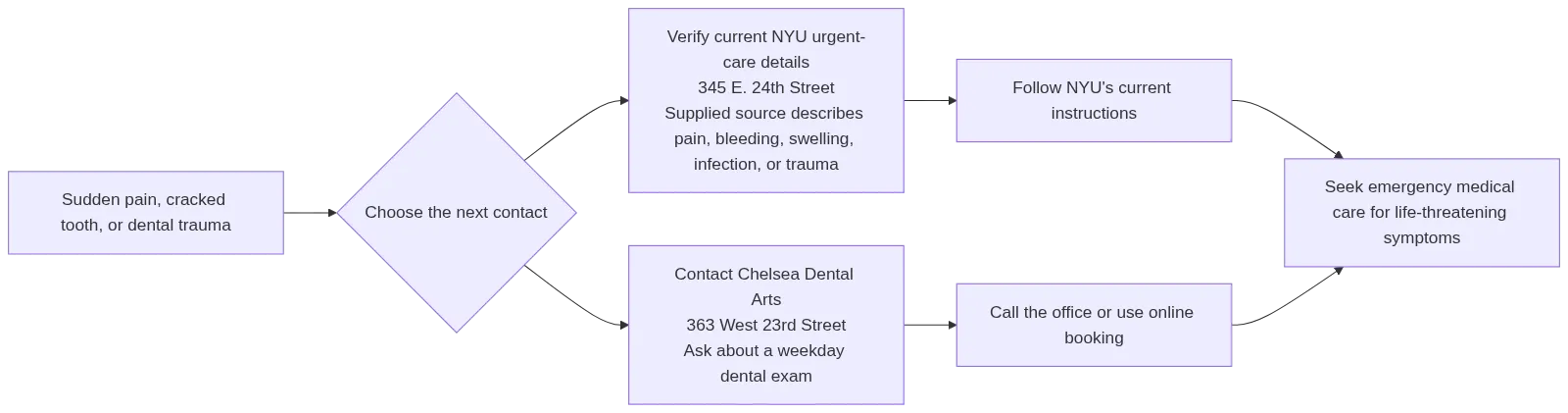
NYU College of Dentistry, not Chelsea Dental Arts, is listed at 345 E. 24th Street in Manhattan. It offers walk-in urgent care during the listed weekday hours for patients with pain, excessive bleeding, swelling, oral infection, or trauma. The information does not confirm Chelsea Dental Arts availability.
Sudden tooth pain: take these next steps
If symptoms feel urgent, seek in-person dental care promptly.
Use the source page to check the Manhattan urgent-care option it describes.
Follow up with a dental exam if you need continued care.
This article does not diagnose the cause.
If you are unsure how serious the problem is, start with urgent in-person care and keep the next visit focused on evaluation. The source page describes a Manhattan urgent-care option without an appointment during listed weekday hours. Dental triage still does not diagnose the condition.
Chelsea or NYU: choose the next dental contact
Direct answer: If you are deciding where to start in Manhattan, the cited NYU College of Dentistry page confirms an urgent-care option at its Manhattan location.
Manhattan urgent-care decision point
Decision factor
NYU College of Dentistry
Location
Manhattan site at 345 E. 24th Street
What is confirmed here
Urgent care for pain, excessive bleeding, swelling, oral infection, and/or trauma
Appointment status
Available without an appointment during listed weekday hours
How to use the information
Use the NYU page if you are checking a separately listed Manhattan urgent-care option
The key point is simple: the cited page describes NYU College of Dentistry’s own Manhattan urgent-care service.
That means a patient should use the page for the NYU option itself and not assume it applies to any other practice.
Choosing the next dental contact in Manhattan
Direct answer: For urgent dental symptoms, the confirmed source option is NYU College of Dentistry’s Manhattan urgent care service at 345 E. 24th Street, which accepts walk-ins during listed weekday hours for pain, excessive bleeding, swelling, oral infection, and/or trauma; use it for urgent care, not a routine visit, and note that hours may change and same-day treatment is not guaranteed outside the source’s terms.
Dental exam: filling or crown questions to ask
If you are comparing next steps after a sudden dental problem, use the source page to confirm the Manhattan urgent-care option it describes. Then plan a dental exam to decide what treatment comes next.
Ask these questions during the exam:
What do you see as the main problem today?
Do I need urgent care, a follow-up visit, or both?
What treatment is most appropriate next?
What warning signs should make me call the office sooner?
NYU Dentistry Emergency Care: What the Search Means
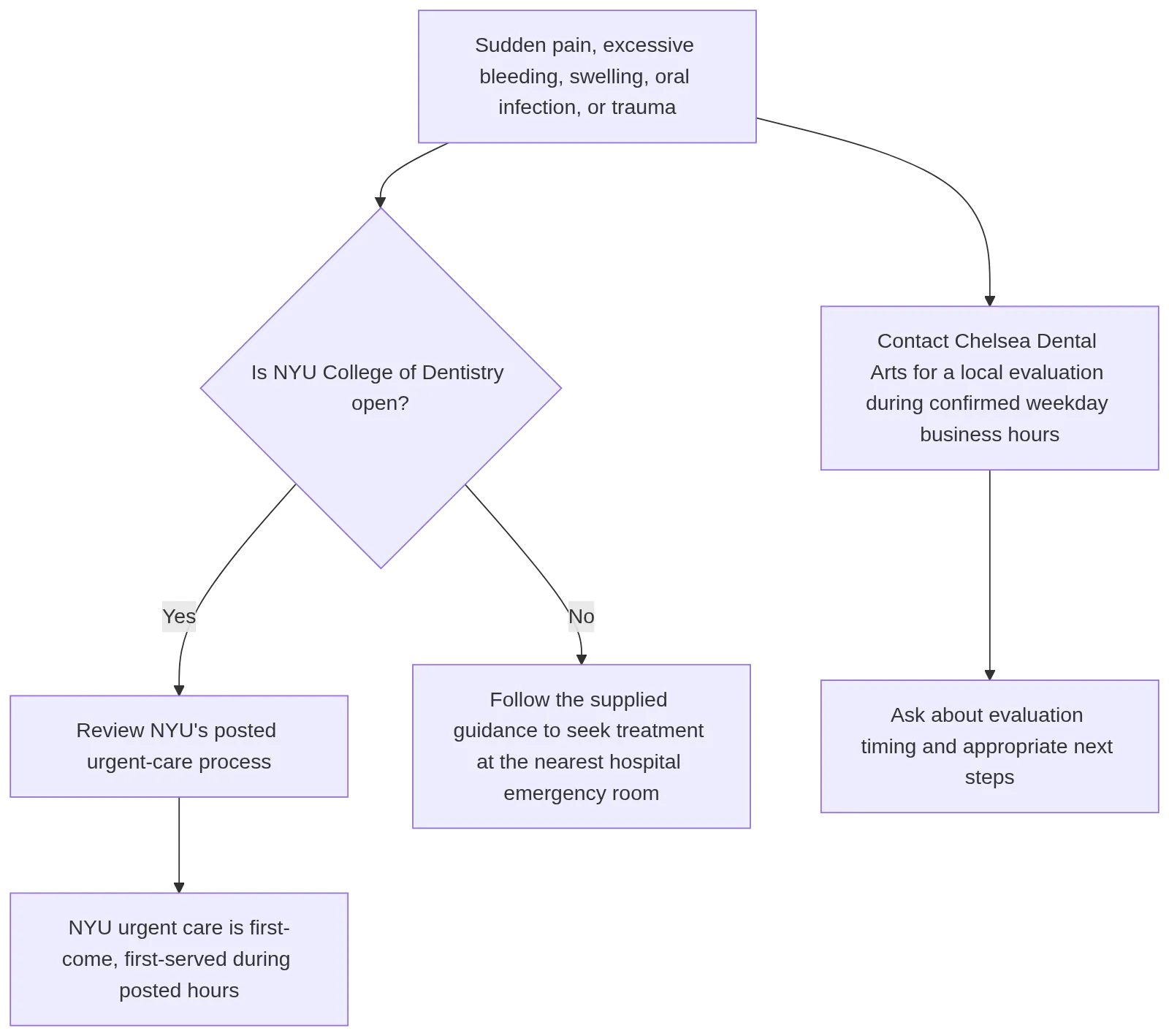
NYU’s supplied urgent-care guidance names pain, excessive bleeding, swelling, oral infection, and trauma as reasons patients may need prompt attention.
NYU urgent care is described as first-come, first-served during posted hours, which may change.
If NYU College of Dentistry is closed, the supplied guidance directs patients with those urgent symptoms to the nearest hospital emergency room.
A filling-versus-crown decision requires a dental exam rather than symptoms alone.
Chelsea Dental Arts is located at 363 West 23rd Street, but its exact urgent-care hours and treatment timing must be confirmed directly.
"nyu dentistry emergency" refers to NYU College of Dentistry urgent care for painful or traumatic problems such as pain, excessive bleeding, swelling, oral infection, or trauma. It is first-come, first-served, and no appointment is needed during posted urgent-care hours.
NYU College of Dentistry is at 345 E. 24th St. in Manhattan. Patient appointment hours are Monday through Thursday, 8:00 am to 6:30 pm, and Friday, 8:00 am to 5:00 pm; hours can change.
Urgent Dental Symptoms: When to Seek Prompt Help
Urgent dental symptoms include pain, excessive bleeding, swelling, oral infection, and trauma. Treat these as time-sensitive and contact Chelsea Dental Arts promptly during weekday appointments.
Urgent dental problem: practical next steps
If the urgent dental concern occurs when NYU College of Dentistry is closed, go to the nearest hospital emergency room. This applies only to the NYU guidance and does not describe Chelsea Dental Arts availability.
Seek emergency care immediately for life-threatening symptoms; for urgent dental problems that are not a medical emergency, contact the dental office, and do not wait if the condition is rapidly worsening.
Chelsea Dental Care: How to Contact a Local Practice
Chelsea Dental Arts is the local practice for Chelsea and nearby Manhattan patients who need a prompt dental evaluation, but the NYU urgent-care source does not prove exact office hours or same-day availability.
When you call the office, ask whether the problem can be evaluated, what information they need, and whether weekday appointments are available. Also be ready to share where the pain is, when it started, any swelling or bleeding, and whether the tooth was cracked, chipped, or hit.
Contact a Manhattan dental practice during weekday business hours; exact hours and immediate treatment availability are not confirmed. If pain includes excessive bleeding, swelling, oral infection, or trauma, seek urgent care per NYU guidance, and if the practice is closed, go to the nearest hospital emergency room.
Filling or Crown: Why an Examination Comes First
A dental exam should come first because pain, a crack, or a broken edge does not show how deep the damage is. The exam can determine whether the tooth needs a filling, a crown, or another repair, and it can also check for oral-facial pain sources. NYU general dentistry lists exams, cavities, root canals, crowns, and oral-facial pain treatment among its services, showing why symptoms alone are not enough to choose one fix.
Fillings and crowns are both common restorative options, but they solve different problems. Fillings are usually used when the damage is smaller and the tooth still has enough structure to support a repair, while crowns cover more of the tooth when it is too weakened for a smaller restoration. NYU dentistry program pages list fillings, crowns, bridges, and other restorative services, but that does not mean every case needs the same treatment or that every office uses the same plan.
If appearance matters, ask after the exam which material and shade options may fit the tooth. This is especially relevant for a discreet repair in the front of the mouth or near the smile line, where the restoration should blend with the tooth and still withstand chewing.
Before You Call: Information to Have Ready
Before you call, note when the pain started, whether there was a crack or injury, and whether you have bleeding, swelling, or infection concerns. That helps the office judge urgency when you call for a dental exam. For a same-day or weekday request, describe the tooth, pain level, and any trauma in one short sentence.
NYU’s urgent-care pages support the emergency-dentistry context and general dentistry terms, but they do not describe Chelsea Dental Arts’ own hours, services, or availability. Use NYU only as evidence about urgent-dental concerns and general dentistry, not as a substitute for Chelsea practice details.
Sources
Emergency Services/Urgent Care – NYU College of Dentistry
Dental Medicine—Family Health Centers at NYU Langone
Patient Care – NYU College of Dentistry – New York University
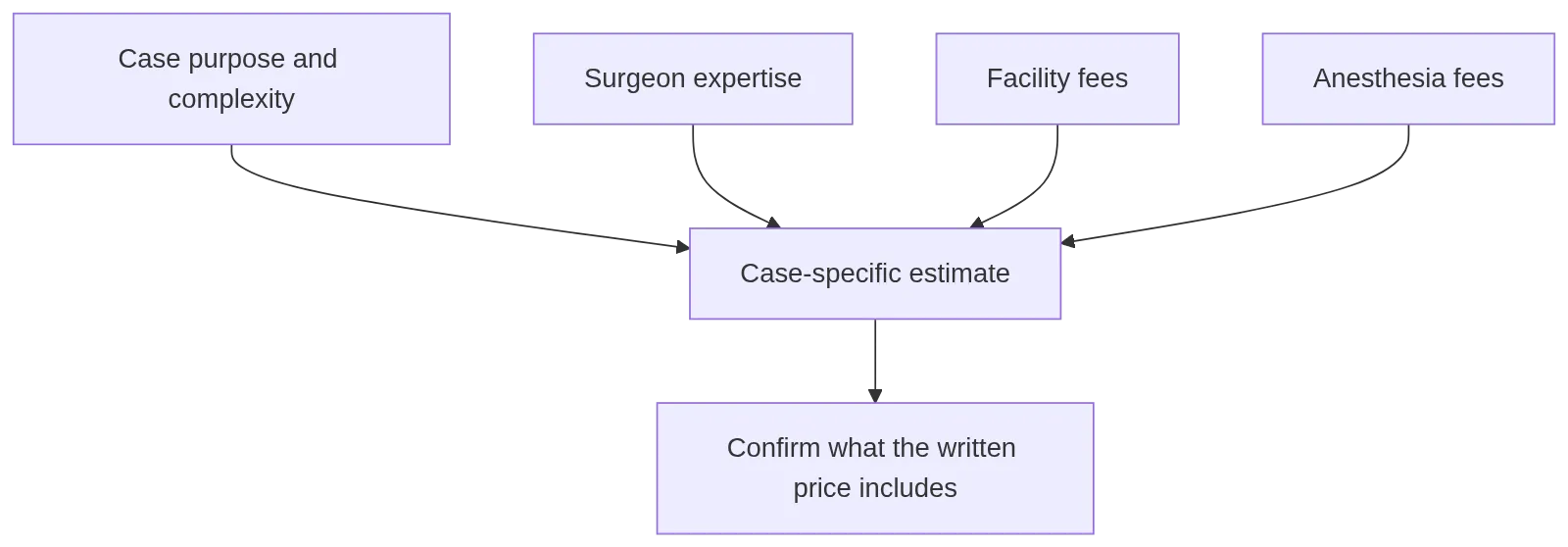
Case complexity: primary and revision cases can differ substantially.
Surgeon expertise: experience and specialization often affect pricing.
Facility and anesthesia fees: these can add materially to the total.
Revision rhinoplasty is usually more complex because prior surgery can leave scar tissue, change anatomy, and reduce available cartilage.
How rhinoplasty pricing varies
A quoted price only helps if you know what it includes: confirm whether it covers the surgeon’s fee, operating facility, anesthesia, and follow-up care, because published examples do not use one universal package. In Beverly Hills, pricing varies by case specifics and by the fees included in the quote.
Rhinoplasty case complexity: why goals and history matter
Rhinoplasty planning depends on the goal: aesthetic cases focus on shape and proportion, functional cases focus on breathing, and combined cases address both.
Revision rhinoplasty is usually more complex than primary rhinoplasty because prior surgery can leave scar tissue, alter internal anatomy, and reduce the cartilage available for reshaping.
A realistic estimate depends on the exam, the goals, and the surgical history. Published source material shows that rhinoplasty pricing varies with complexity, surgeon expertise, and facility or anesthesia fees. Revision cases are generally more complex than primary cases, and cost can rise with those added factors. Compare quotes only after separating primary from revision cases and functional from cosmetic work, because those are not interchangeable price categories.
Rhinoplasty consultation questions: what to clarify about price
Ask for an itemized quote, not just a headline number. Confirm whether it includes the surgeon’s fee, facility fee, anesthesia, pre-op testing, and follow-up visits, and ask what could change the estimate if your case is more complex than a straightforward primary rhinoplasty. Compare written answers carefully, since there is no single standard package.
Use the consultation to confirm candidacy, not just cost. Ask whether your goals and expectations match the planned result, whether any airway obstruction needs treatment, and whether screening concerns such as obstructive sleep apnea or body dysmorphic disorder apply. Also ask how the surgeon explains recovery, breathing changes, complications, and the chance of future surgery so you can compare consultations on the same clinical questions.
Compare the written answers, not just the lowest number. A useful quote should explain the scope of surgery, the assumptions behind the fee, and any later costs, especially for revision rhinoplasty, where prior surgery can leave scar tissue, altered anatomy, and less available cartilage. For a functional and aesthetic decision, compare whether each surgeon explains airway goals and recovery in the same detail.
Beverly Hills rhinoplasty providers: how to weigh price and fit
Judge the consultation by whether it covers your reasons for surgery, your expectations, airway concerns, recovery, complications, and any possible future surgery. This is especially important if you want both cosmetic refinement and breathing support. The plan should be explained in plain language and matched to your nasal anatomy, not just your desired look.
In Beverly Hills, Dr. Daniel Golshani’s materials describe rhinoplasty as an aesthetic, functional, or combined procedure, with pricing varying by complexity and by surgeon, facility, and anesthesia fees.
Do not choose on price alone: published source material puts rhinoplasty averages above $4,000, and Beverly Hills quotes can vary by case and included fees. Ask for a written breakdown and compare it with how clearly the provider explains your goals, airway considerations, and recovery timeline.
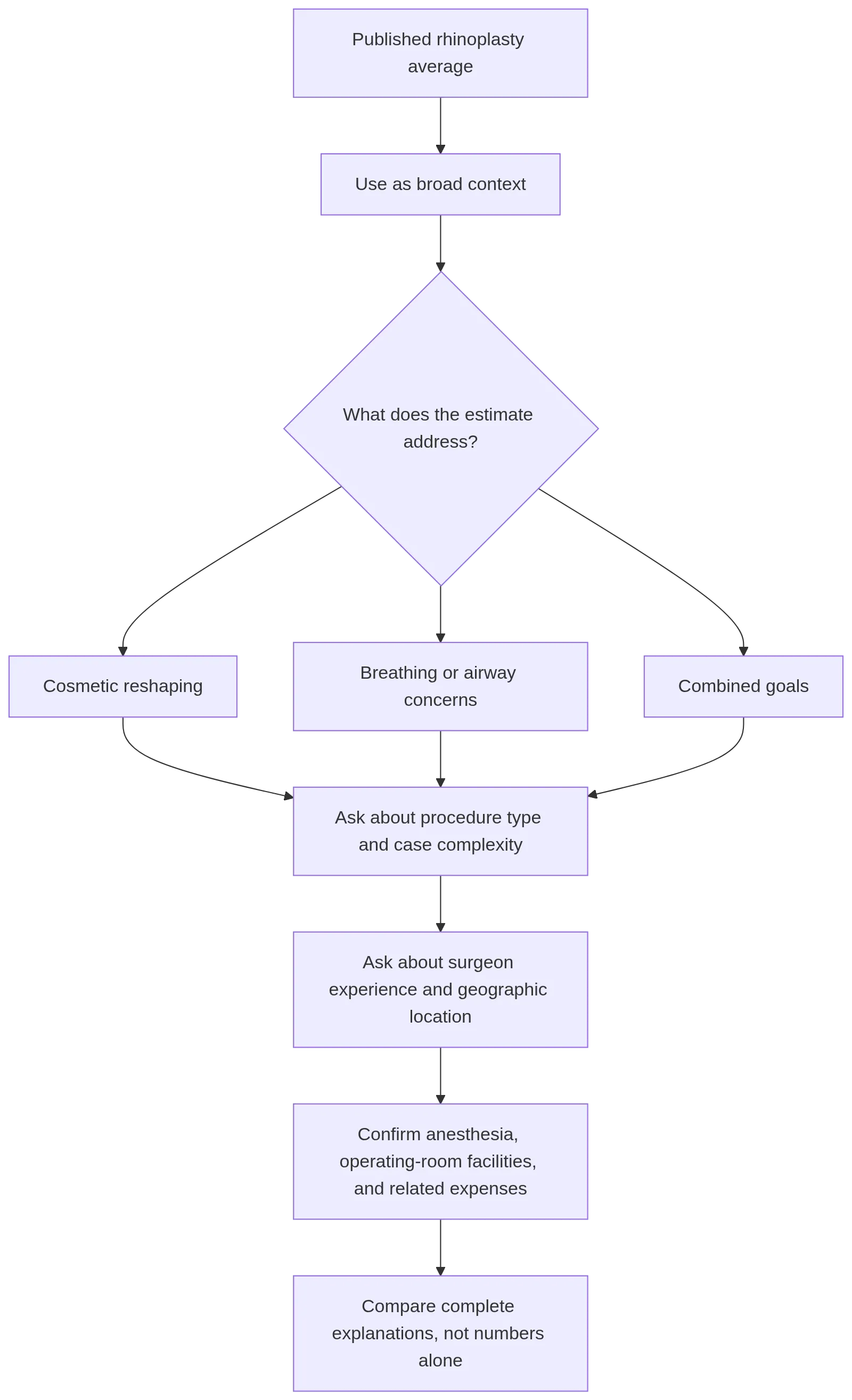
The supplied American Society of Plastic Surgeons average for rhinoplasty is $7,637, but it excludes anesthesia, operating-room facilities, and related expenses.
Rhinoplasty may address nasal appearance, breathing function, or both, so the purpose of surgery can affect the treatment discussion and estimate.
Surgeon experience, procedure type, geographic location, and case complexity are documented factors that can change rhinoplasty pricing.
Insurance may cover medically necessary functional treatment in some cases, but coverage depends on documentation, insurer rules, and medical necessity.
Before comparing estimates, ask what each price includes, which goals it addresses, and how recovery and possible future surgery are discussed.
Rhinoplasty changes the nose’s shape or appearance and can also improve airflow. If you are considering it after an injury or a previous procedure, the price depends on whether the goal is cosmetic, functional, or both.
Functional rhinoplasty addresses breathing problems or airway blockage.
Combined rhinoplasty does both in one operation.
That distinction matters because insurance may cover the functional part when there is a documented medical need, while cosmetic work is generally self-pay.
Average Rhinoplasty Cost Provides Context, Not a Quote
The American Society of Plastic Surgeons reports an average rhinoplasty cost of $7,637; use it as broad context, not as a quote for Dr. Golshani or any individual case.
This average excludes anesthesia, operating-room, and related fees, so the total may be higher.
Rhinoplasty Cost Changes With Procedure and Case Factors
Procedure type: cosmetic reshaping, breathing correction, or both.
Surgeon experience: more specialized planning may affect professional fees.
Location: office geography can shift local market pricing.
Included services: anesthesia, operating room fees, and related charges may not be in the base estimate.
The documented average rhinoplasty cost is $7,637, and that figure does not include anesthesia, operating room facilities, or other related expenses.
[Estimate factors](https://www.vartany.com/blog/how-much-does-rhinoplasty-cost-in-los-angeles) and the questions they answer
Factor
Why it can change the estimate
Question to ask
Procedure goal
Rhinoplasty can be performed to address cosmetic concerns, functional breathing issues, or both, so the estimate may reflect different planning needs.
Does this estimate cover cosmetic work, breathing work, or both?
Procedure type
Pricing can vary based on the type of rhinoplasty performed.
What type of rhinoplasty is included in this estimate?
Surgeon experience
Surgeon experience can influence professional fees.
What part of the total reflects the surgeon’s fee?
Geography
Geographic office location can affect pricing norms.
How does Beverly Hills pricing compare with other locations?
Included services
Anesthesia and facility charges may be separate.
Which items are included, and which are billed separately?
How to Evaluate a Rhinoplasty Cost Estimate
Insurance Coverage Depends on Medical Necessity
Rhinoplasty may be coveredwhen it treats a medically necessary breathing problem, such as a deviated septum, rather than a purely cosmetic change. Coverage is not automatic; it depends on documentation, the insurer’s rules, and clear proof of the functional problem, and cosmetic portions are generally not covered. For readers weighing rhinoplasty cost, the key question is whether the surgery includes a documented airway issue and how much of it is functional versus cosmetic.
Questions to Ask Before Choosing a Beverly Hills Rhinoplasty Practice
Start by asking whether the plan is cosmetic, functional, or both, because rhinoplasty can address appearance and breathing together.
What specific nasal changes are you recommending for my goals?
Will you evaluate airway obstruction, including a deviated septum if breathing is part of my concern?
What does your estimate include: surgeon fee, anesthesia, and operating room costs?
What recovery milestones should I expect in the first few weeks?
What complications, revisions, or possible future nasal surgery should I understand before deciding?
These questions matter most for Rhinoplasty Candidates who are comparing aesthetic, injury-related, or previous-procedure concerns.
When comparing Beverly Hills rhinoplasty options with Dr. Daniel Golshani, consider each practice’s procedure focus, recovery guidance, and whether it handles cosmetic concerns, functional breathing issues, or both. The supplied evidence also says rhinoplasty pricing can vary by surgeon experience, procedure type, and office location, and insurance may cover the procedure when it is medically necessary to improve breathing function or correct an airway problem. Use that to compare convenience, communication, and the scope of care you want to discuss in one consultation.
General rhinoplasty evidence cannot tell you whether you are a candidate, what your final result will look like, or your exact quote. Published average rhinoplasty cost can offer context, but it is not a practice-specific price and does not include every case-specific expense; use it as a comparison point and verify whether breathing correction or other medical needs affect coverage.
Restoring Confidence: The Mommy Makeover Journey in Beverly Hills
What Is a Mommy Makeover?
A Mommy Makeover is a personalized combination of procedures designed to help women restore their pre-pregnancy body confidence. Commonly, it includes breast and abdomen reshaping, tailored to each patient’s needs. Dr. Golshani, a double board-certified surgeon in Beverly Hills, offers coordinated surgical planning for natural-looking results.
Benefits and Ideal Candidates
Benefits:
Tightens loose skin
Flattens the abdomen
Improves stubborn areas resistant to diet and exercise
Achieves natural-looking results
Ideal Candidates:
Women after pregnancy or major weight loss
Those comparing tummy tuck, liposuction, and mommy makeover options
Patients seeking aesthetic and reconstructive surgery with patient-centered care
Recovery and Aftercare
Recovery times vary depending on the procedures performed. Most patients can expect gradual improvement over several weeks. Dr. Golshani’s practice emphasizes patient-centered care, including virtual consultations and comprehensive aftercare support for a smooth recovery.
Restoring Confidence: The Transformative Benefits of a Mommy Makeover in Beverly Hills
What Is a Mommy Makeover?
A Mommy Makeover is a personalized combination of procedures designed to help women restore their pre-pregnancy body confidence. Commonly, it includes breast and abdomen reshaping, tailored to each patient’s needs. Dr. Golshani, a double board-certified surgeon in Beverly Hills, offers coordinated surgical planning for natural-looking results.
Who Benefits from a Mommy Makeover?
Ideal candidates are women after pregnancy or major weight loss who want to:
Tighten loose skin
Flatten the abdomen
Improve stubborn areas that did not change with diet or exercise
Patients often compare tummy tuck, liposuction, and mommy makeover options, seeking patient-centered care and expert guidance.
Recovery and Aftercare
Recovery varies based on the procedures chosen. Dr. Golshani’s practice emphasizes comprehensive aftercare, including virtual consultations and support for Destination Surgery patients. Most patients can expect a gradual return to normal activities, with personalized guidance throughout their journey.