
Clarify Texas capital gains tax context
Texas does not impose a state income tax, so capital gains are not taxed at the state level for Texas residents or businesses. Most states tax capital gains as ordinary income, but Texas business owners only need to account for federal capital gains taxes when selling assets such as real estate, stocks, or business interests. For Texas owners, a capital-gains-focused review packet should include federal capital gains documentation, asset sale records, prior-year records, and payroll records as relevant, along with Texas franchise tax materials if your entity is subject to them. Keep state and federal requirements clearly labeled and prepare related questions for your credentialed tax professional.
Texas Capital Gains Packet Workflow:
To streamline your preparation, use a Texas-specific workflow that separates federal capital gains documentation from Texas franchise tax requirements. Begin by listing all asset sales and capital transactions for the tax year, then assign each record to one of two folders: (1) "Federal Capital Gains" and (2) "Texas Franchise Tax." For each asset sale, note whether it affects only federal reporting or also impacts Texas franchise tax gross revenue calculations. If your entity is subject to franchise tax, add a worksheet that cross-references each asset sale with the relevant franchise tax form line (such as gross revenue or gains/losses sections). This approach ensures that your credentialed tax professional can quickly verify which transactions require federal reporting, which may affect Texas franchise tax filings, and which records are missing or need clarification.
Texas-Focused Packet Template Example:
| Item | Entity | Tax Period | Source | Status | Federal Impact | Texas Franchise Tax Impact | Follow-up Needed |
|---|---|---|---|---|---|---|---|
| Sale of business equipment | ABC-LLC | 2025 | Closing docs | Confirmed | Yes | Yes (gross revenue) | No |
| Sale of investment property | ABC-LLC | 2025 | Brokerage stmt | Estimated | Yes | No | Get final 1099-B |
| Asset sale (vehicle) | ABC-LLC | 2025 | Bill of sale | Missing | Yes | Yes (gross revenue) | Locate record |
Use this template to organize your packet, making it easy to track which records are ready, which are pending, and which require follow-up. This method also helps you document open questions for your credentialed tax professional, such as whether a particular asset sale should be included in Texas franchise tax gross revenue or only in federal capital gains reporting. By maintaining a clear, Texas-focused structure, you reduce confusion and ensure a more productive review meeting.
Understand federal capital gains tax treatment
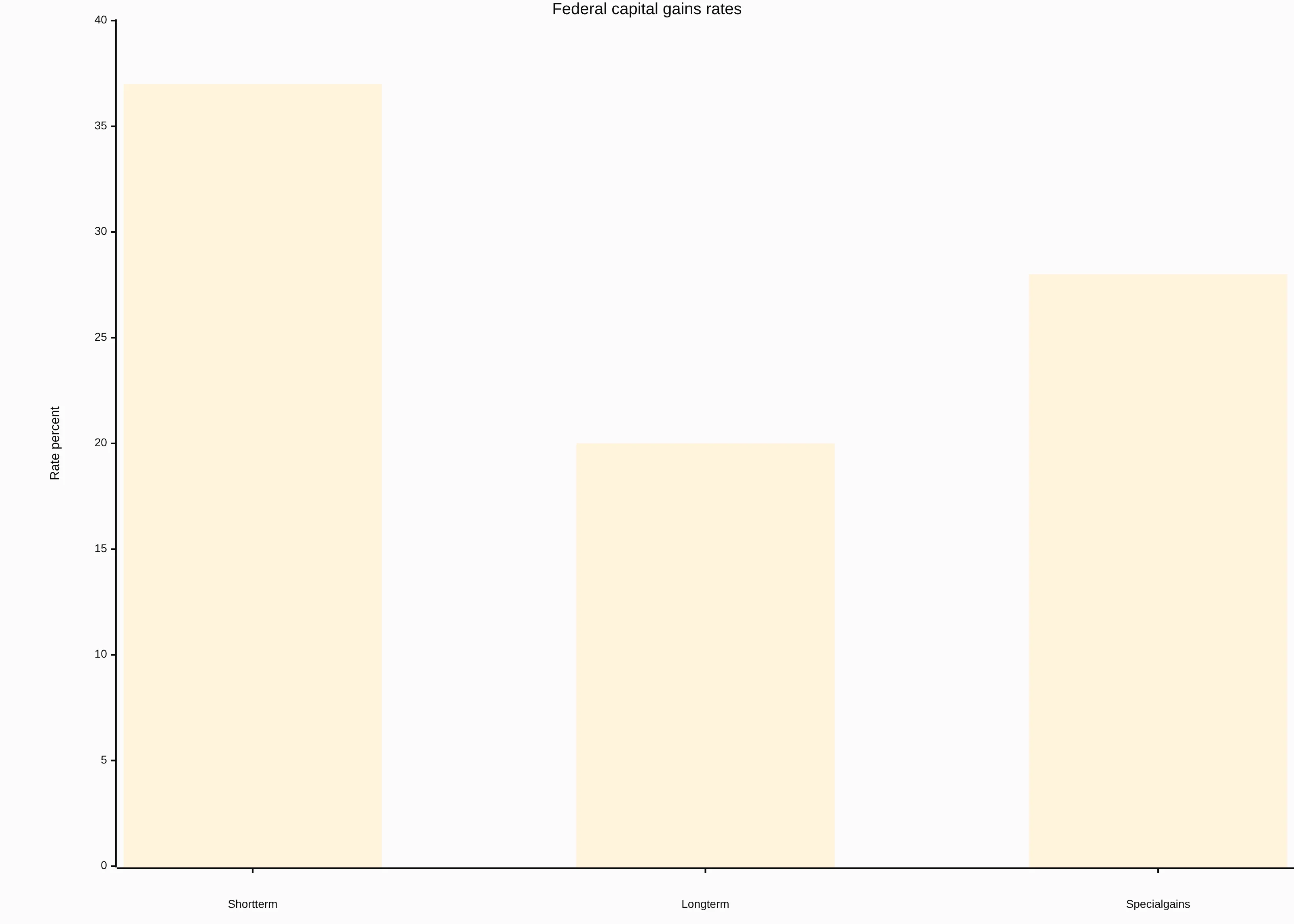
Federal capital gains taxes apply to the profit realized when you sell a capital asset—such as stocks, bonds, real estate, or business property—for more than its purchase price. The tax rate depends on how long you held the asset and your overall taxable income.
- Short-term capital gains (assets held one year or less) are taxed at ordinary federal income tax rates, ranging from 10% to 37%.
- Long-term capital gains (assets held more than one year) are typically taxed at 0%, 15%, or 20%, depending on your filing status and taxable income.
- Certain types of gains, such as those from collectibles or qualified small business stock, may be taxed at higher rates (up to 28%).
Losses from the sale of personal-use property, such as a home or car, are not deductible for federal purposes. For Texas business owners, federal capital gains tax rates are the primary concern, since there is no state capital gains tax.
Federal Capital Gains Documentation Checklist:
To prepare for your tax-planning meeting, gather and organize the following records for each capital asset sale:
- Closing statements or settlement sheets (for real estate, business property, or equipment sales)
- Brokerage statements showing realized gains or losses (for stocks, bonds, or mutual funds)
- Form 1099-B or other information returns received from brokers or counterparties
- Purchase documents (invoices, contracts, or receipts) to establish cost basis
- Depreciation schedules (if the asset was depreciated for tax purposes)
- Prior-year Schedule D and Form 8949 (to track carryforward losses or prior transactions)
- Supporting correspondence for any adjustments, disputes, or pending transactions
For each record, note the asset description, date acquired, date sold, purchase price, sale price, and any adjustments (such as commissions or fees). Label each document by entity and tax period, and indicate whether the record is confirmed, estimated, or missing. This checklist helps ensure that all relevant federal capital gains documentation is included in your review packet and ready for professional review.
Example:
| Asset Sold | Entity | Tax Period | Source | Status | Date Acquired | Date Sold | Cost Basis | Sale Price | Adjustments | Follow-up Needed |
|---|---|---|---|---|---|---|---|---|---|---|
| Office building | ABC-LLC | 2025 | Closing docs | Confirmed | 01/15/2010 | 09/30/2025 | $500,000 | $900,000 | $10,000 fees | No |
| Stock (XYZ Corp) | ABC-LLC | 2025 | Brokerage stmt | Estimated | 03/10/2022 | 12/15/2025 | $20,000 | $35,000 | $100 fees | Get final 1099-B |
By using this checklist and table, you can quickly identify which records are ready, which are pending, and which require follow-up before your meeting.
Texas franchise tax: entity distinctions, thresholds, and reporting
The Texas franchise tax is not an income tax and does not specifically tax capital gains. It is imposed on taxable entities formed or doing business in Texas and is based on the entity’s margin, not on net income or capital gains. However, Texas Franchise Tax forms may require reporting gains or losses as part of gross revenue calculations for certain entities. When assembling your review packet, include asset sale records as part of your gross revenue documentation if your entity is subject to franchise tax reporting.
Label capital gains records by entity and period
For each capital asset sale or gain, label the record with:
- Entity: The legal business name or structure (LLC, corporation, partnership, sole proprietorship)
- Tax period: The calendar or fiscal year covered (example: 2025)
- Source: Where the record originated (bookkeeping system, brokerage statement, closing documents)
- Status: Whether the record is confirmed, estimated, missing, or needs follow-up
Use a clear file-labeling pattern, such as entity_period_record-status (example: "ABC-LLC_2025_asset-sale_confirmed"). This helps your credentialed tax professional quickly identify which records are ready for review and which need clarification.
Labeling Tip:
When labeling digital files, use consistent folder and file names to separate capital gains records by entity and period. For example, create a main folder for each entity ("ABC-LLC"), then subfolders for each tax year ("2025"), and within each, separate folders for "Federal Capital Gains" and "Texas Franchise Tax." Place each document in the appropriate folder and add a status tag to the file name (e.g., "2025_1099B_confirmed.pdf" or "2025_closing-statement_missing.pdf"). This system makes it easier to share your packet with your credentialed tax professional and to track which items are complete or need follow-up. If you use a cloud storage service, consider sharing view-only access to the organized folders before your meeting.
Organize and document capital gains records for Texas and federal review
Include the following types of capital gains records in your tax-planning review packet:
- Sales of business assets (equipment, vehicles, real estate)
- Disposals of investment property (stocks, bonds, partnership interests)
- Sales of business interests (ownership shares, mergers, buyouts)
- Asset sale closing statements
- Brokerage account statements showing realized gains or losses
- IRS Form 1099-B or other information returns related to asset sales
When disposing of business property, follow federal reporting requirements for capital gains or losses. Keep personal and business documentation separate, and clearly label each record by entity and period.
Record Type Table Example:
| Record Type | Example Document | Source Location | Entity | Tax Period | Status | Follow-up Needed |
|---|---|---|---|---|---|---|
| Equipment sale | Bill of sale, closing docs | Bookkeeping, emails | ABC-LLC | 2025 | Confirmed | No |
| Stock sale | Brokerage statement, 1099-B | Brokerage platform | ABC-LLC | 2025 | Estimated | Await final 1099-B |
| Real estate sale | Closing statement | Title company, attorney | ABC-LLC | 2025 | Missing | Request from title |
| Partnership interest sale | Sale agreement | Legal files | ABC-LLC | 2025 | Confirmed | No |
Practical Implication:
By listing each record type, its source, and status, you create a clear roadmap for your review packet. This approach helps you and your credentialed tax professional quickly spot missing documents, confirm which transactions are ready for review, and identify any items that need further action before filing. It also ensures that all relevant capital gains transactions are included, reducing the risk of overlooked sales or incomplete reporting.
Document status and follow-up for each record
For every capital gains record, mark its status:
- Confirmed: The record is complete and matches your books or statements.
- Estimated: The amount is based on preliminary figures or pending transactions.
- Missing: The record is not available and needs to be located.
- Needs follow-up: The record requires clarification, correction, or additional documentation.
Add a follow-up note for each item needing action before your tax-planning meeting. This helps your credentialed tax professional focus on unresolved issues and speeds up the review process.
Status Tracking Worksheet:
Create a worksheet or spreadsheet with columns for each record’s item, entity, period, source, status, and follow-up action. For example:
| Item | Entity | Period | Source | Status | Follow-up Action |
|---|---|---|---|---|---|
| Sale of equipment | ABC-LLC | 2025 | Closing docs | Confirmed | None |
| Stock sale (XYZ Corp) | ABC-LLC | 2025 | Brokerage stmt | Estimated | Await final 1099-B |
| Real estate sale | ABC-LLC | 2025 | Title company | Missing | Request closing docs |
Update this worksheet as you gather records. Before your meeting, review the worksheet to ensure all items are accounted for and unresolved issues are clearly flagged. This method provides a clear audit trail and makes it easier for your credentialed tax professional to address outstanding questions efficiently.
Prepare for federal reporting of capital gains
Most sales and other capital transactions must be reported on IRS Form 8949 and summarized on Schedule D (Form 1040). If you make or receive payments in your business, you may have to report them to the IRS on information returns and furnish a copy to the recipient or payee. Include these forms and supporting documents in your review packet, and flag any questions about federal reporting for your credentialed tax professional.
Clarify treatment of capital losses
If your capital losses exceed your capital gains, up to $3,000 ($1,500 if married filing separately) of the excess loss can be used to reduce federal taxable income each year. Any remaining loss can be carried forward to future years. Document capital losses separately from gains, and include carryforward worksheets or prior-year Schedule D summaries in your packet.
Note Texas entity distinctions
Texas franchise tax applies differently depending on your business structure:
- A sole proprietorship not legally organized to limit liability is not subject to Texas franchise tax.
- A single-member LLC filing as a sole proprietor for federal tax purposes is a taxable entity for Texas franchise tax.
- Texas franchise tax filing responsibility is determined by legal formation, not federal tax treatment.
Label your capital gains records with the correct entity type and confirm whether franchise tax reporting applies.
Texas franchise tax threshold and reporting
In 2025, the no tax due threshold for the Texas Franchise Tax Report was $2,470,000 in annualized total revenue. Entities below this threshold were not required to file a Franchise Tax Report for that year but still needed to file an information report. Confirm your entity’s revenue status for the relevant tax period and include information reports in your review packet.
List open capital gains questions for review
Prepare a list of unresolved questions about capital gains for your credentialed tax professional, such as:
- Which asset sales require federal reporting this year?
- Are any gains subject to special federal rates (collectibles, small business stock)?
- How should estimated gains or pending transactions be documented?
- What entity distinctions affect Texas franchise tax reporting?
- Are there carryforward losses from prior years?
Include these questions in your review packet, clearly labeled for follow-up.
Open Questions Log Example:
| Question | Entity | Period | Status | Follow-up Needed |
|---|---|---|---|---|
| Does the sale of equipment affect Texas franchise tax gross revenue? | ABC-LLC | 2025 | Open | Confirm with professional |
| Is the gain on partnership interest subject to special federal rates? | ABC-LLC | 2025 | Open | Review IRS guidance |
| How should pending real estate sale be documented if not closed by year-end? | ABC-LLC | 2025 | Open | Clarify reporting method |
| Are there any prior-year capital loss carryforwards to apply? | ABC-LLC | 2025 | Open | Review prior Schedule D |
Practical Tip:
Maintain this log as a living document. Update it as questions are resolved or new issues arise. Share the log with your credentialed tax professional before your meeting to help them prepare targeted answers and streamline the review process. This approach ensures that no important question is overlooked and that your meeting time is used efficiently.
Emphasize packet organization for meeting productivity
Organized records improve the productivity of tax-planning meetings. By assembling a review-ready packet with labeled capital gains records, entity distinctions, status notes, and open questions, you help your credentialed tax professional focus on the facts and unresolved issues. Finish your preparation by reviewing what is ready, what is missing, what is estimated, and what needs follow-up.
Review handoff: what is ready, missing, or needs follow-up
What records should I bring for asset sales and other capital transactions?
Bring closing statements, brokerage statements, Form 1099-Bs, and any books showing the sale. Include the asset name, sale date, cost basis, and whether the figure is confirmed or still estimated.
How should I separate historical records from forecasts?
Keep prior-year returns, statements, and transaction support in one section. Put projected sales, assumed prices, and other forecast assumptions in a separate section so they do not get mixed with source records.
Do I need to include Texas franchise tax materials with capital gains records?
Yes, if your entity files Texas franchise tax reports. Add the entity’s franchise tax documents and any gains or losses that affect gross revenue reporting, but keep that separate from federal capital gains records.
What if I have losses instead of gains?
Document those transactions on their own and keep the supporting basis records. If losses exceed gains, note any carryforward history from prior years so the credentialed tax professional can review it.
What open questions should I flag before the meeting?
Flag whether each sale is federal reporting only, whether any gain may receive special treatment, and whether any transaction is still missing support. Also note any entity or period questions that need follow-up.
Leave a Reply