

Tag: cardiac monitoring

  • Urgent Care in Albuquerque: When Sudden Symptoms Need the Emergency Department

    Urgent Care in Albuquerque: When Sudden Symptoms Need the Emergency Department

    Urgent Care in Albuquerque: When Sudden Symptoms Need the Emergency Department — article preview

    By ABQ ER & Hospital

    Urgent Care Versus the Emergency Department for Sudden Symptoms

    • Chest pain, trouble breathing, severe pain, and severe abdominal pain may need emergency-department evaluation rather than urgent care.
    • If symptoms are severe or life-threatening, call 911 right away or use the nearest emergency department.
    • Emergency evaluation may include assessment, advanced diagnostic testing, and continuous monitoring, although capabilities and timing can vary by facility and patient acuity.
    • ABQ ER & Hospital is a local emergency-care option in Albuquerque; the supplied evidence does not support a promised wait time or outcome.
    • Online guidance cannot diagnose symptoms, so emergency symptoms require prompt professional evaluation.

    Urgent care is for non-emergency problems. The emergency department is the right place for chest pain, trouble breathing, severe pain, or severe abdominal pain. If symptoms seem serious or life-threatening, call 911 or go to the nearest emergency department instead of urgent care.
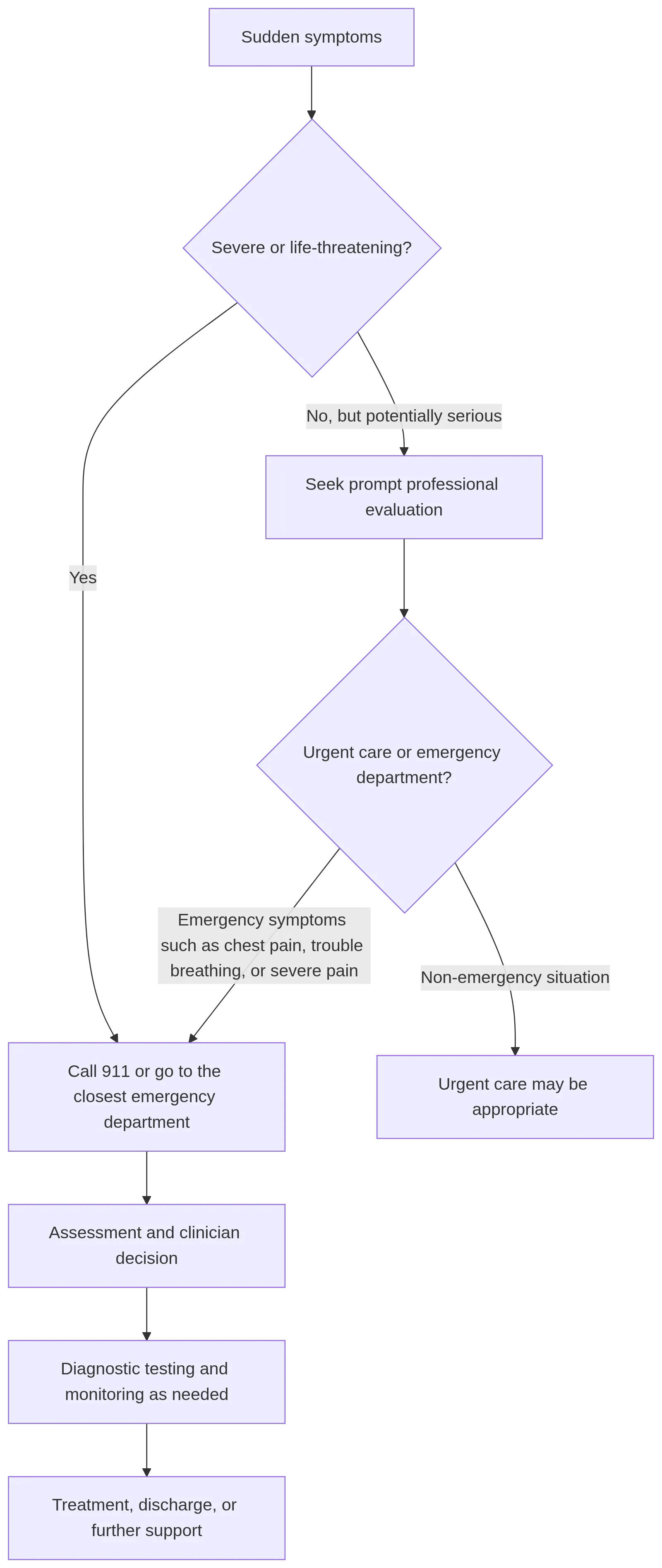
    Decision pathway showing when sudden symptoms may require emergency evaluation, when to call 911, and what assessment, diagnostic testing, and monitoring may follow.
    Choosing the right care for sudden symptoms

    Symptoms that should prompt emergency-care consideration include:

    • Chest pain
    • Trouble breathing
    • Severe pain
    • Severe abdominal pain
    • Sudden injury or trauma

    These symptoms can signal an emergency rather than a routine urgent-care visit, especially when they are sudden, worsening, or paired with sweating, fainting, or confusion. In Albuquerque, ABQ ER & Hospital can provide emergency care in the emergency department when a person needs prompt evaluation.

    When to Call 911 Instead of Driving

    If symptoms seem dangerous, get emergency help now. Call emergency services or go to the nearest emergency department for crushing chest pressure, trouble breathing, severe pain, severe abdominal pain, or a sudden collapse.

    What Emergency Evaluation May Include

    Emergency departments typically begin with a clinician assessment and add tests and monitoring as symptoms require. For chest pain or other severe symptoms, this may include cardiac monitoring, imaging, and laboratory testing while the team decides next steps. If symptoms feel severe or life-threatening, seek immediate emergency care now.

    Availability and timing vary by facility and by how urgent your condition is. Emergency departments handle higher-acuity problems, so someone with chest pain may be routed differently than someone with a less urgent concern. ABQ ER & Hospital in Albuquerque offers emergency care for sudden symptoms, but this article cannot promise which tests you will need or how quickly they will happen.

    Albuquerque Emergency-Care Next Steps

    For sudden chest pain, trouble breathing, severe pain, severe abdominal pain, or trauma, go to the emergency department, not urgent care. In Albuquerque and nearby communities, ABQ ER & Hospital is an emergency care option for symptoms that need prompt evaluation. Online guidance cannot diagnose symptoms, so get immediate professional assessment when the situation feels urgent.

    ABQ ER & Hospital is a local Albuquerque emergency department option for sudden symptoms that need immediate evaluation. Emergency departments can use continuous cardiac monitoring and advanced diagnostic tools for serious symptoms, including on-site CT, MRI, X-ray, and ultrasound, plus 24-hour laboratory and inpatient pharmacy support. That helps when the next step is prompt testing and treatment, not a delayed appointment.

  • Duke City Urgent Care or the ER? How Albuquerque Patients Can Choose

    Duke City Urgent Care or the ER? How Albuquerque Patients Can Choose — article preview

    By ABQ ER & Hospital

    Urgent care scope: Minor to moderate, non-life-threatening problems

    • Urgent care fits minor to moderate, non-life-threatening illnesses.
    • Severe or life-threatening symptoms need emergency care, not urgent care.
    • Call 911 for shortness of breath or any symptom that may be life-threatening.
    • Chest pain, severe bleeding, head injury, vision loss, and severe abdominal pain are examples of symptoms that need a conventional emergency department.
    • ABQ ER & Hospital connects this guidance to emergency evaluation with on-site imaging, cardiac monitoring, and 24-hour laboratory services.

    Choosing where to go for sudden symptoms can feel stressful, and you do not have to sort it out alone. Duke City Urgent Care is intended for minor to moderate, non-life-threatening problems. If you have chest pain, stroke symptoms, severe bleeding, a head injury, vision loss, severe abdominal pain, or shortness of breath, seek emergency care at the nearest emergency department; call 911 when symptoms may be life-threatening. Emergency symptoms require prompt professional evaluation.

    The supplied location count shows five Duke City Urgent Care locations in Albuquerque and Los Lunas; it shows where clinics exist, not whether they are the right place for a serious symptom or a faster visit.

    Emergency warning signs: When urgent care is not enough

    If you have chest discomfort, severe pain, or another sudden severe symptom, go to the nearest emergency department; do not treat it like routine urgent care.

    Symptom information cannot tell you which diagnosis you have. Emergency symptoms require prompt professional evaluation, especially when breathing trouble or chest pain is involved.

    Call 911: Breathing trouble and possible life-threatening symptoms

    If you have sudden shortness of breath, call emergency services right away. Suspected life-threatening symptoms belong in the nearest emergency room, not urgent care.

    Next step: Match symptom severity to emergency evaluation

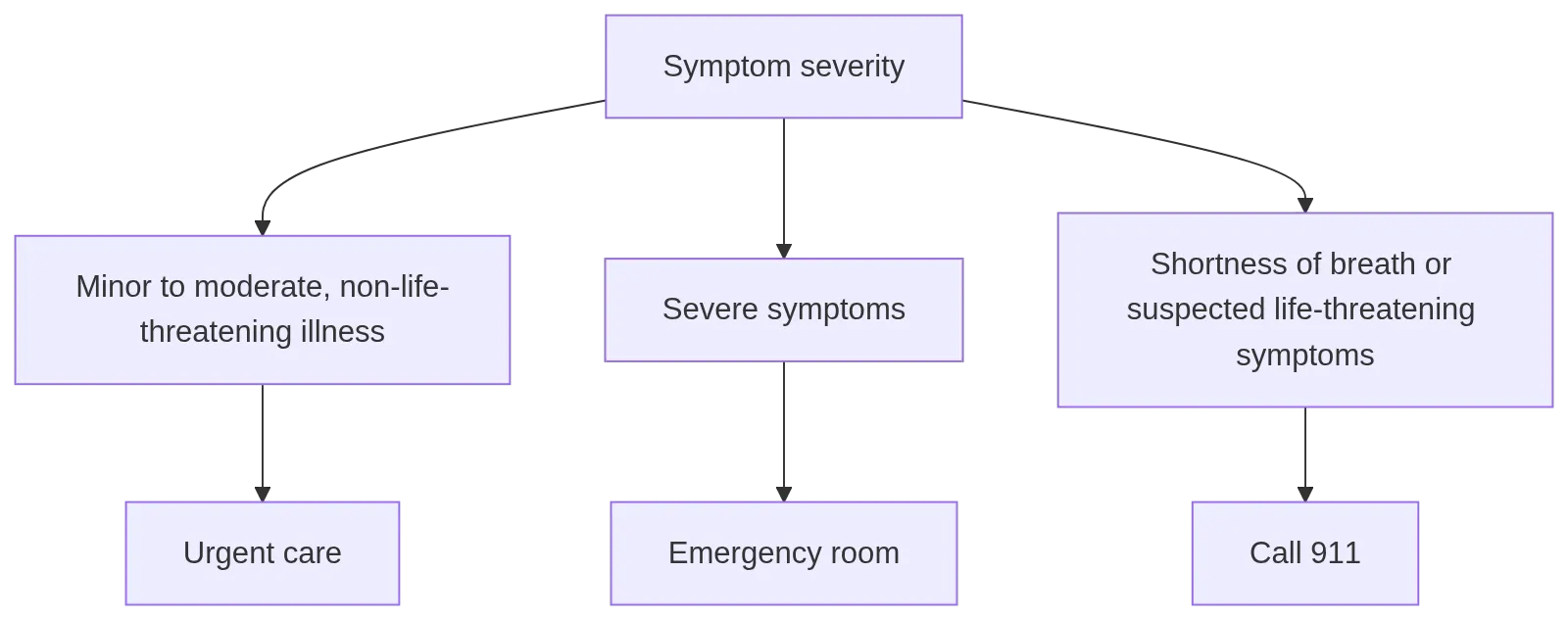
    If symptoms are minor or moderate, urgent care may fit. If symptoms are severe or possibly life-threatening, choose emergency care now. If you suspect a life-threatening condition, go to the nearest emergency room immediately.

    A three-branch symptom decision path showing minor to moderate non-life-threatening illness leading to urgent care, severe symptoms leading to an emergency room, and shortness of breath or suspected life-threatening symptoms leading to 911.
    Choose the right level of care

    For Albuquerque readers who need emergency evaluation, ABQ ER & Hospital is relevant when symptoms call for an emergency department, not urgent care. Its on-site imaging, cardiac monitoring, and 24-hour laboratory services help assess serious symptoms at the point of care.

    Before you choose where to go, ask:

    • Is this symptom severe enough for an emergency department?
    • Do I need cardiac monitoring, imaging, or same-day lab testing?
    • Could this become dangerous if I wait?

    If the answer is yes or unsure, call 911 for shortness of breath or go to the nearest emergency room.