
Breast cancer surgery is one part of a broader treatment plan
Breast cancer surgery is not one isolated decision. It is one part of a treatment plan that may also include medicines used against cancer, radiation, and discussions about reconstruction. Breast cancer treatment often includes surgery such as breast-conserving surgery or mastectomy. For many early-stage cancers, surgery is performed first. In other situations, treatment may come before surgery to shrink a tumor or affected underarm lymph nodes.
The purpose of an operation can differ across situations. In early-stage breast cancer, removing the cancer can reduce the chance of cancer returning locally. When breast cancer has spread to another part of the body, medicines are usually the main treatment; surgery may sometimes be considered to relieve symptoms in a specific area. These are general treatment patterns, not a way to determine what is right for one person. Your oncology and breast-surgery team must interpret your diagnosis, test results, and priorities.
Cancer-directed breast surgery is different from elective breast augmentation. Augmentation is a cosmetic procedure and is not treatment for breast cancer. The useful question is not simply “Which operation is best?” It is “What is the purpose of surgery in my overall plan, and what decisions need to be made together?”
Use a five-part map to understand what is being decided
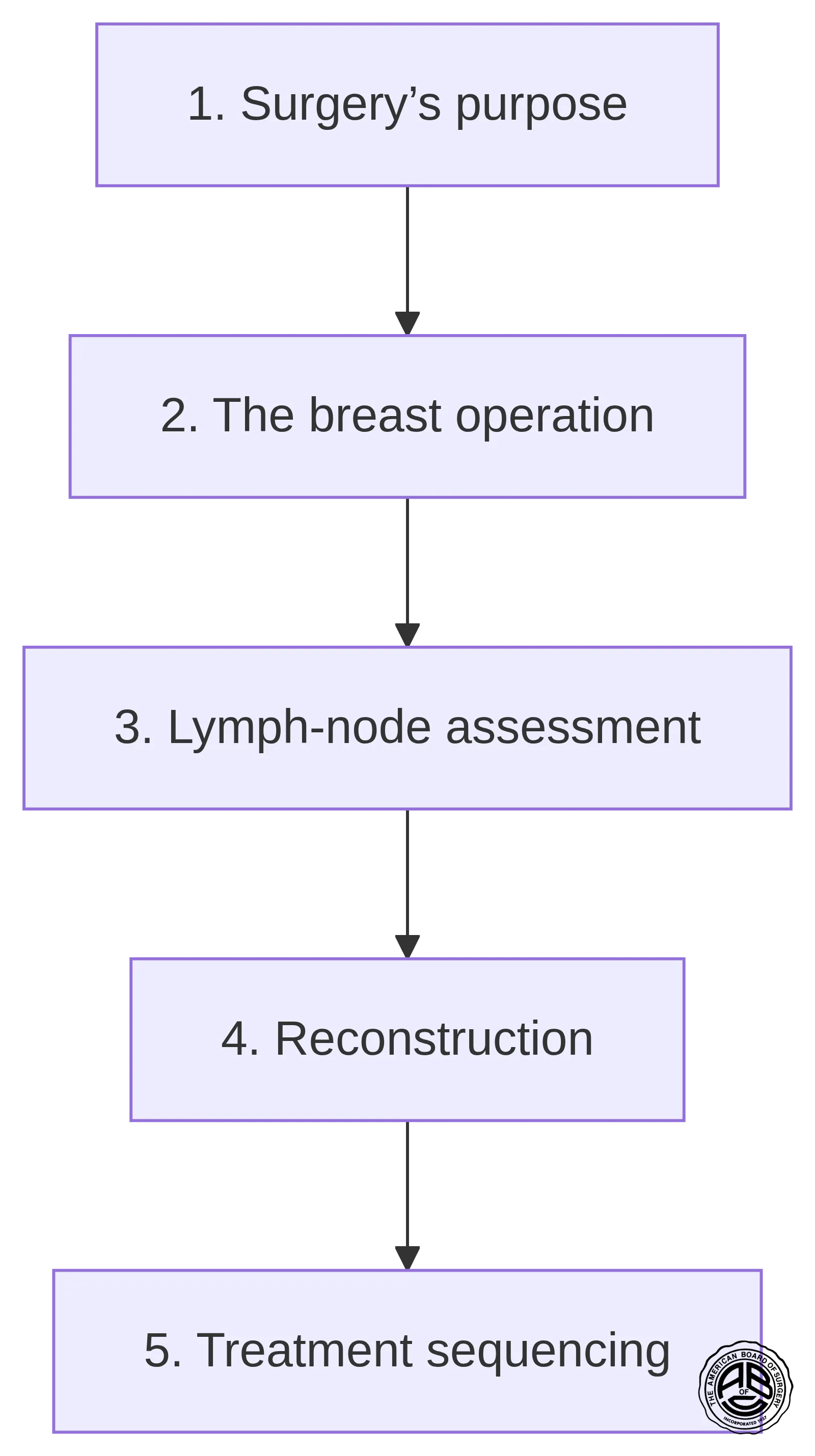
A cancer care team considers medical history and the features of the cancer when discussing surgery. In some situations, more than one surgical option may be available. A practical way to prepare is to separate the conversation into five connected parts.
- Surgery’s purpose: Is the operation intended to remove cancer from the breast, gather information that will guide treatment, relieve a local problem, or serve more than one purpose?
- The breast operation: Is the discussion about breast-conserving surgery, mastectomy, or another approach to removing breast tissue?
- Lymph-node assessment: Will the team assess lymph nodes, and how could those findings affect staging or later treatment discussions?
- Reconstruction: Do you want information about rebuilding the breast mound after mastectomy, and if so, what timing should be discussed?
- Treatment sequencing: What is planned before surgery, after surgery, or alongside it, including radiation or medicines?
This map does not replace medical advice. It helps you hear the plan as a set of related decisions rather than a list of unfamiliar procedure names. It also gives you room to state what matters to you and how much guidance you want from your clinicians. If you prefer a recommendation, say so; if you want to compare options carefully, ask the team to explain the differences in plain language.
Breast-conserving surgery and mastectomy address different surgical questions
Breast-conserving surgery removes the cancer and some nearby normal tissue while leaving the rest of the breast in place. You may also hear it called a lumpectomy or partial mastectomy. How much tissue is removed depends on factors including the tumor’s size and location.
Mastectomy removes the entire breast, including all breast tissue and sometimes nearby tissues. It is a different operation with a different scope; it is not merely a larger lumpectomy.
Radiation planning is one reason the choice cannot be reduced to procedure names alone. Radiation is commonly part of treatment after breast-conserving surgery. After mastectomy for early-stage cancer, radiation may be less likely, but the decision remains individualized. Ask the team to explain the expected role of radiation for the proposed approach rather than assuming it will or will not be needed.
If more than one approach is medically appropriate, ask what each option is designed to accomplish, what additional treatment is commonly considered with it, and which details of your cancer or medical history are driving the recommendation. You can also discuss how each approach may relate to your priorities. Do not try to select an operation from a general overview; ask your breast surgeon to connect these choices to your own records and treatment plan.
Mastectomy details and reconstruction are related but separate decisions
“Mastectomy” describes a category of surgery, not one identical experience for every patient. A total, or simple, mastectomy removes the whole breast, including breast tissue, the nipple, areola, and most overlying skin. In a skin-sparing mastectomy, breast tissue is removed while most outer skin is kept for reconstruction. Surgeons can sometimes preserve the nipple and areola, but sensation and nipple function can change after this type of surgery.
Reconstruction is a separate conversation from whether a mastectomy is recommended. After mastectomy, reconstruction may rebuild the breast mound using an implant or a person’s own tissue. Some people want to discuss reconstruction early; others may have different priorities, including choosing not to reconstruct. Timing is also a planning question. At Memorial Sloan Kettering, breast surgery and reconstruction are often done during the same procedure, but that is an institutional practice, not a promise that the same timing will fit every person.
Ask whether reconstruction is an option for you, whether a reconstruction specialist should join the discussion, and what choices about timing are relevant to your treatment plan. A team can explain the surgical details, likely stages of planning, and the limits of what can be predicted for an individual.
Lymph-node assessment can help guide staging and treatment planning
Breast surgery may include a discussion about nearby lymph nodes. In a sentinel lymph node biopsy, the surgeon removes the first lymph nodes that receive drainage from the breast. It may be done during lumpectomy or mastectomy, or separately.
For early-stage breast cancer, checking sentinel lymph nodes can show whether cancer has spread beyond the breast and help inform staging and treatment planning. If cancer is found in sentinel nodes, the team may discuss further lymph-node surgery or radiation to lymph nodes. In certain situations, some people with early-stage breast cancer may not need lymph-node surgery; the team determines that plan with the patient.
It is reasonable to ask what node procedure, if any, is being proposed; what information it is meant to provide; and how its results could affect the next decisions. The answer should be specific to your diagnosis. A node procedure is not automatically required simply because it is part of another person’s treatment plan.
Plan for individualized recovery, lymphedema discussions, and support
Recovery planning should be individualized. Before surgery, find out who will provide your discharge instructions, how follow-up will be arranged, and whom to contact with concerns. Your team should tailor instructions to the operation performed and to the rest of your care plan. Clarify what preparation is expected, whether an overnight stay is anticipated, and what the first follow-up visit will address.
If lymph nodes are removed or treated, ask about lymphedema. Lymph-node removal can disrupt lymph flow and contribute to lymphedema, a chronic swelling condition that can occur soon after treatment or later. Risk is higher when many underarm nodes are removed and can also increase with radiation to underarm nodes. No approach can guarantee prevention. Lymphedema has no cure, but treatment approaches may help manage symptoms. Ask your team about your individual risk, symptoms they want you to report, and whether rehabilitation or lymphedema support is appropriate.
The effects of a breast cancer diagnosis and surgery are not only physical. Some cancer centers offer counseling, mental health services, support groups, or psycho-oncology support. Bringing up emotional concerns is part of cancer care, not a distraction from it.
For preparation and recovery, follow the instructions from your own cancer and surgical teams. General online guidance cannot safely substitute for the individualized instructions they give you.
Bring this grouped question checklist to your cancer-care visit
Use this as a conversation tool, not as a self-diagnosis guide. Write down answers, bring a support person if you wish, and ask for plain-language explanations when needed.
About the diagnosis and the plan
- What do my pathology and imaging results mean for surgical planning?
- What is the purpose of surgery in my treatment plan?
- Do I have more than one medically appropriate option? If so, what are the trade-offs you want me to understand?
About the proposed breast operation
- Which operation do you recommend, and why?
- What tissue would be removed, and what factors in my case led to that recommendation?
- What side effects or changes should I discuss before deciding?
- Will I likely need additional treatment after surgery, including radiation or medicines?
About lymph nodes and treatment sequence
- Is lymph-node assessment planned? What question will it answer?
- If sentinel nodes contain cancer cells, what further options might be discussed?
- Is treatment planned before surgery? If so, what is the goal of that sequence?
- How could the surgery and node findings affect later treatment planning?
About reconstruction
- Is reconstruction an option for me?
- Should I speak with a reconstruction surgeon now?
- What timing choices should I understand in relation to my cancer treatment?
About recovery and follow-up
- How soon is surgery needed, how long may it take, and should I expect an overnight hospital stay?
- What should I expect after surgery, and who gives my individualized recovery instructions?
- When is follow-up, and which symptoms or changes should I report to the team?
- What is my lymphedema risk, and should I discuss rehabilitation or lymphedema support?
About support and your role in decisions
- What counseling, social-work, peer-support, or survivorship resources are available?
- What matters most for me to consider when comparing options?
- How can I tell you the role I want to have in making this decision?
End the visit by asking the team to summarize the next step and the reason for it. If you remain uncertain, say so directly and ask what additional explanation or specialist input would help.
Use the map to prepare for a personalized cancer-team conversation
The five parts of planning—surgery’s purpose, the breast operation, lymph-node assessment, reconstruction, and treatment sequence—belong in one conversation. Your clinicians can apply them to your diagnosis, medical history, and priorities; an article cannot do that work for you.
Take the checklist to a qualified oncology and breast-surgery team, especially if you are deciding among options or preparing for an operation. Ask for timely guidance about personal concerns, recovery instructions, and changes you are unsure about. The consultation below concerns surgical or med spa treatment and is not a substitute for cancer-directed oncology or breast-surgery evaluation.
Frequently asked questions about breast cancer surgery
How does breast cancer surgery fit with other treatments?
Surgery may be used to remove the cancer, gather information that helps with staging, or help with local control. Depending on the situation, it may come before or after radiation or medicines, and sometimes treatment is given before surgery to shrink the tumor or nearby nodes.
What is the difference between breast-conserving surgery and mastectomy?
Breast-conserving surgery removes the cancer and a margin of nearby normal tissue while leaving most of the breast in place. A mastectomy removes the entire breast, so it has a different scope and may lead to different follow-up treatment discussions.
Is lymph-node surgery always part of treatment?
Not always. Some people do not need lymph-node surgery, while others may have a sentinel lymph node biopsy to check whether cancer has spread beyond the breast. If cancer is found in those nodes, the team may discuss more lymph-node surgery or radiation.
Can breast reconstruction be discussed at the same time as surgery planning?
Yes. Reconstruction is a separate decision that can be discussed early, especially if a mastectomy is being considered. It may use an implant or your own tissue, and the timing should be planned with the cancer team.
What should I ask about recovery after breast cancer surgery?
Ask who will give your discharge instructions, what follow-up will look like, whether an overnight stay is expected, and what symptoms or changes you should report. It is also reasonable to ask about lymphedema risk, rehabilitation, and any support services that may help during recovery.
What questions help when deciding between surgical options?
A useful approach is to ask which operation is recommended, why it fits your diagnosis, what tissue would be removed, and what additional treatment may follow. You can also ask how your imaging, pathology, and personal priorities affect the plan.