
Start With Breast Awareness, Not Self-Diagnosis
Breast awareness means knowing what is familiar for your own body and taking a meaningful change seriously. It does not mean trying to decide at home whether a breast looks healthy or whether a lump is harmless. What is normal for one person may not be normal for another, and breasts can naturally differ in appearance, texture, and sensitivity.
A useful way to think about breast health is to separate a familiar pattern from a change in that pattern. A long-standing difference in size, an uneven texture you recognize, or tenderness that predictably accompanies your menstrual cycle may be part of your usual baseline. A new, persistent, or concerning difference deserves a conversation with a qualified healthcare professional. Contact a healthcare provider when you notice a change in how your breasts look or feel.
This overview explains the basic structures of the breast, why normal variation is common, and which changes merit clinical attention. It cannot diagnose a symptom, determine an individual cancer risk, or replace an examination by a clinician. Breast awareness involves noticing and communicating, not using a home test for disease.
What Breasts Are Made Of and What They Do
Breasts are made of several kinds of tissue rather than one uniform structure. In female breasts, much of the volume outside pregnancy and lactation comes from adipose, or fatty, tissue and collagenous tissue. Mammary glands make up a relatively small proportion of that volume. Muscles connect the breasts to the ribs.
The visible parts include the nipple and the areola, the more deeply colored skin around the nipple. Nipples have many nerves, so sensitivity to stimulation varies widely from person to person. Under the skin, milk ducts and glandular tissue are part of the breast’s feeding-related anatomy. Mammary glands are modified sweat glands.
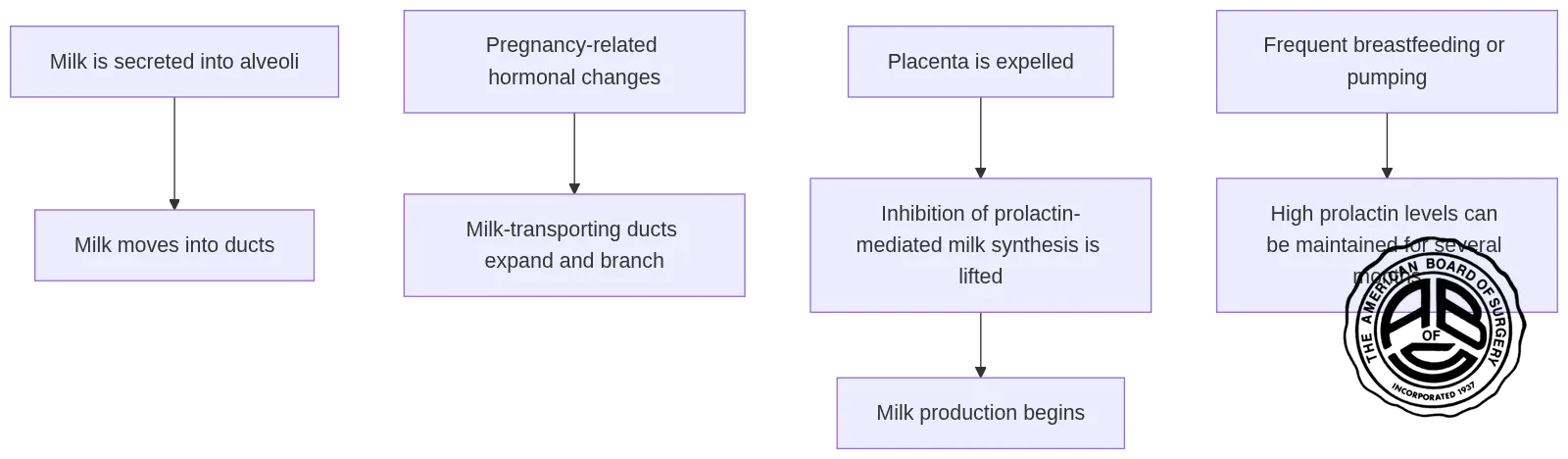
During lactation, milk is secreted into tiny milk-producing spaces called alveoli and moved into ducts. Pregnancy-related hormonal changes expand and branch these milk-transporting ducts. After the placenta is expelled, the inhibition of prolactin-mediated milk synthesis is lifted and milk production begins.
People of all sexes have breast tissue. Male breasts have nipples and areolae externally, with undeveloped milk ducts and no glandular tissue internally. During puberty, testosterone usually limits breast development in males. Gynecomastia is a noncancerous condition that can enlarge male breast tissue. Breast tissue can become cancerous in people of any sex, so a concerning breast change should not be dismissed based on sex.
The feeding-related parts of the breast are not a separate structure that can be judged from the outside. During lactation, milk-producing alveoli are grouped into lobules and drain toward the nipple through ducts. This helps explain why pregnancy can involve changes in breast tissue as ducts expand and branch in response to hormonal changes. Frequent removal of milk through nursing or pumping can maintain high prolactin levels for several months. These general physiological details do not establish whether a particular person will produce milk or explain a specific feeding concern. Questions about lactation, milk production, pain, or a breast change during pregnancy or after delivery need individualized guidance from an appropriate healthcare professional.
Why Breasts Can Differ in Size, Shape, Texture, and Sensitivity
There is no single breast size, shape, or feel that defines health. One breast may be somewhat larger, sit differently, or have a different contour than the other. This is called breast asymmetry: the breasts are not exactly the same on each side. Asymmetry is common and is usually not a concern, particularly when it developed during puberty and has remained familiar. It may be influenced by genes.
Texture also differs. Many women say their breasts feel lumpy or uneven. That observation alone does not identify a condition. The important question is whether the texture is typical for you or whether there is a new, localized, or persistent difference.
Breasts can change over time for ordinary reasons. Periods, having children, weight changes, certain medications, and aging can affect how breasts look and feel. Temporary hormonal changes during menstrual cycles, pregnancy, or hormone replacement therapy can make breasts grow, sometimes unevenly.
Sensitivity can vary as well. Some people notice more tenderness or awareness at particular times, while others do not. A familiar pattern can be useful context to share with a clinician, but it is not a way to rule out a problem. If a difference is new, persists beyond what is usual for you, or feels concerning, bring it to a healthcare professional rather than assuming it is hormonal.
A practical baseline is not a rigid checklist of how breasts should look. It is your own usual pattern: their typical symmetry, texture, sensitivity, and appearance. Knowing that baseline helps you recognize when something is meaningfully different. It is also reasonable to record when you first notice a change and whether it continues, so you can describe the pattern clearly during an appointment.
Why Appearance or Feel Alone Cannot Confirm Breast Health
Looking at or feeling the breasts can help you notice a change, but it cannot confirm the cause of that change. A breast can look typical and still require routine health care, and a breast can look or feel different for reasons that are not cancer. The role of breast awareness is observation and timely communication—not self-diagnosis.
Breast density is one example of why appearance and touch have limits. Dense breasts have more glandular and fibrous tissue and less fatty tissue. Breast density is not determined by breast size, appearance, or feel. It is information that may appear in a mammogram report, not something a person can reliably determine by looking at or examining the breasts.
Density is a description of tissue composition, not a description of whether a breast feels firm, looks full, or appears symmetrical. It also does not tell a person what a new lump or other symptom means. Dense tissue and tumors can both look white on mammograms, which can make cancer harder to detect on those images. People with very dense breasts have a slightly higher breast-cancer risk, but individual risk needs discussion with a healthcare provider in the context of the person’s own health information. A density finding should therefore be treated as clinical information to discuss, not as a conclusion drawn from appearance or touch.
For the same reason, a soft area is not automatically reassuring and an uneven area is not automatically dangerous. People have different tissue patterns, and changes related to life stages can be real without being visually dramatic. If you are uncertain whether a change is new or important, discuss it with a clinician.
Breast cancer symptoms also vary among people, and some people have no signs or symptoms. That is another reason not to use appearance or sensation alone as a complete assessment of breast health. Follow individualized advice from your healthcare professional about screening and raise any new breast concern between routine visits.
A Lump Can Have Many Causes, but It Still Needs Evaluation
Finding a lump can be unsettling, but a lump is a finding—not a diagnosis. Breast lumps can have many causes. Although cancer is one possibility, many lumps result from other medical conditions, and most breast lumps are noncancerous.
For example, fibrocystic breast condition can cause noncancerous changes that make breasts feel lumpy, tender, or sore. Breast cysts are small fluid-filled sacs that can develop in the breast. These are examples of why a person cannot determine the cause of a lump simply by its feel, shape, or tenderness.
The balanced response is neither panic nor delay. Avoid trying to label a lump at home or waiting for certainty before seeking help. A healthcare provider can evaluate a breast lump or other change and determine whether tests or treatment are needed. If you notice a lump in the breast or underarm, make an appointment for clinical evaluation.
When you speak with a clinician, it can help to describe what you noticed in plain terms: where it is, whether it seems new, whether it has persisted, and whether you have noticed any accompanying change in the breast or nipple. That information supports an evaluation; it does not replace one.
Breast Changes That Merit Prompt Clinical Attention
A concerning breast symptom is not proof of cancer. Many symptoms have other explanations. Still, the following changes merit prompt discussion with a healthcare professional because they need clinical assessment rather than self-diagnosis:
- A new lump in the breast or underarm.
- Thickening or swelling of part of the breast.
- Dimpling or irritation of breast skin.
- Redness or flaky skin on the breast or in the nipple area.
- A nipple that is pulling inward, or new pain in the nipple area.
- Nipple discharge other than breast milk, including bloody discharge.
- A new change in breast size or shape.
New asymmetry deserves attention as well. Long-standing unevenness is common, but if you notice new asymmetry without recent breast growth, there may be a medical cause and it should be discussed with a healthcare provider.
Do not use this list to sort symptoms into “serious” and “safe” categories on your own. Its purpose is to help you recognize when to make contact. If you notice a breast lump or other change, talk with a healthcare provider rather than trying to determine the cause yourself.
What Clinical Evaluation Can Help Determine
Clinical evaluation gives a breast change the context that self-assessment cannot. A healthcare provider can ask about the timing and pattern of a symptom, examine the area, and decide whether further testing or treatment is needed. The purpose is to identify the cause as accurately as possible and determine an appropriate next step.
For a palpable breast mass, clinical evaluation commonly includes a detailed history, a clinical breast examination, and, for almost all women, imaging. The precise approach depends on the person and the finding, so it is not something to prescribe from a general article. A suspicious mass identified on examination or imaging may require biopsy under clinical guidance.
Bring questions, note when you first noticed the change, and share relevant changes in appearance, sensation, discharge, medication use, or timing. This information supports an evaluation; it does not replace one.
The distinction matters: noticing is valuable; diagnosing is a clinical task. The next step should be based on professional evaluation rather than on appearance, feel, or an internet description.
Let Your Usual Baseline Guide Your Next Step
A practical breast-awareness habit is straightforward: recognize what is familiar for you, then act on a meaningful difference. Breasts normally vary in size, shape, texture, and sensitivity, and they can change across life stages. Those facts are reassuring context, not a diagnosis.
If you notice a new or persistent lump, an underarm change, skin or nipple changes, non-milk discharge, a new shift in size or shape, or breast pain that concerns you, contact a qualified healthcare professional. Breastfeeding questions likewise deserve individualized guidance. Professional assessment is the appropriate next step for any symptom you cannot confidently recognize as your usual pattern.
This general information is not a substitute for diagnosis or care. Address a new or concerning breast symptom with an appropriate healthcare professional before pursuing unrelated elective planning.
Frequently Asked Questions About Breast Changes and Density
What is the breast made of?
Breasts are made of several tissues, including fatty and collagenous tissue, milk ducts, glandular tissue, skin, nerves, and supporting muscles. Outside pregnancy and lactation, much of the volume is usually fatty and fibrous tissue, while the milk-producing tissue is a smaller part.
Is it normal for breasts to be different from each other?
Yes. Some asymmetry is common, and breasts can differ in size, shape, texture, and sensitivity. Long-standing differences are often part of a person’s usual baseline, while a new change is the part that deserves attention.
What should I do if I find a lump in my breast?
A lump should be evaluated by a healthcare professional rather than guessed at from touch or appearance. Many breast lumps are noncancerous, but a clinician can determine whether testing or treatment is needed.
Which breast changes need medical attention?
A new lump, thickening, swelling, skin dimpling, redness or flaky skin, nipple pulling-in, bloody or other non-milk discharge, a new change in size or shape, or persistent breast pain should be discussed with a healthcare provider.
Can breast cancer be present without obvious symptoms?
Yes. Breast cancer symptoms vary, and some people have no signs or symptoms. That is one reason breast awareness should focus on noticing changes and following up with a clinician when something seems new or different.
Does breast density change how breasts look or feel?
Not necessarily. Dense breasts have more glandular and fibrous tissue, but density is not determined by breast size, appearance, or feel.