
Start with the location and care-fit question
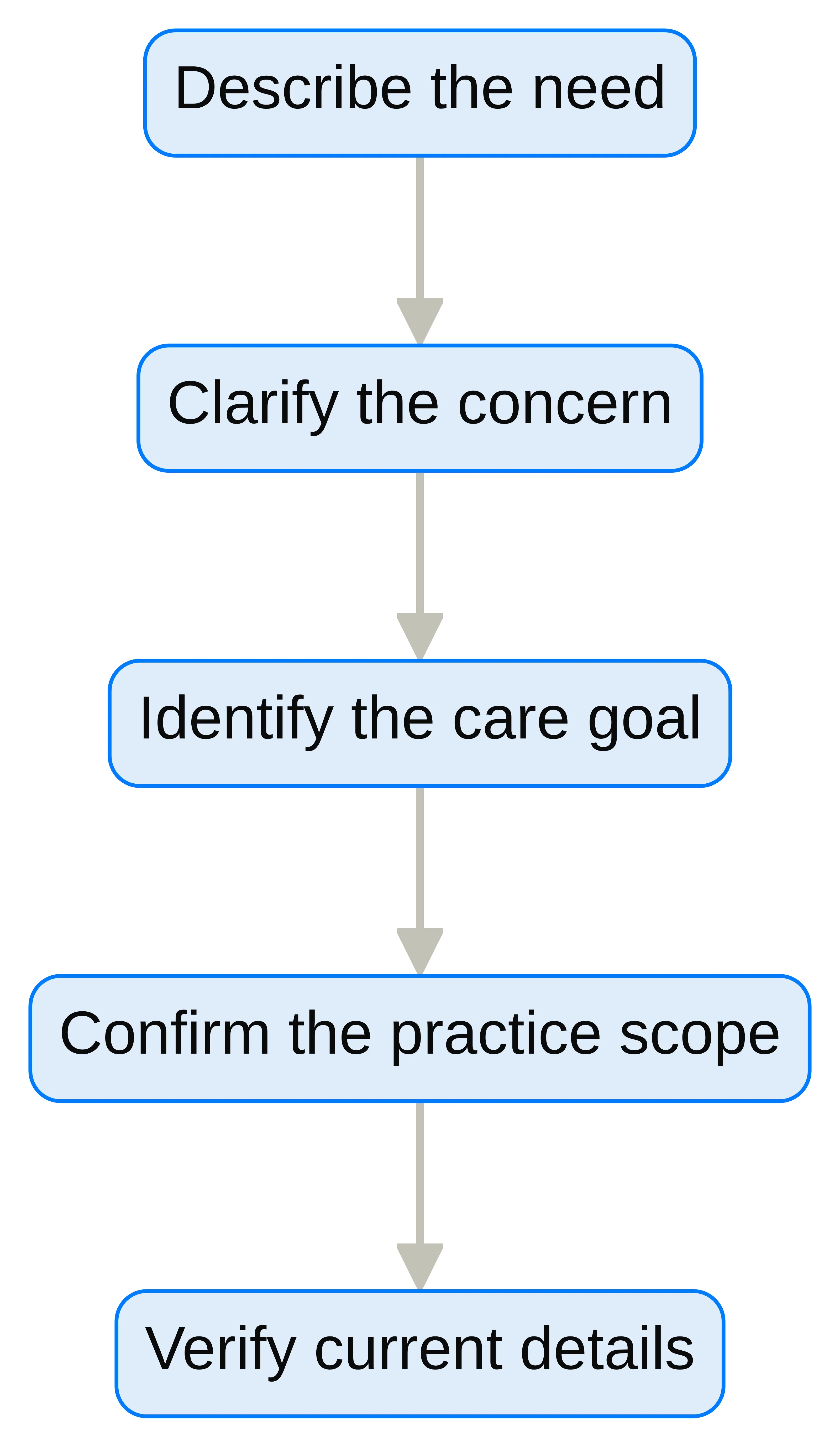
Searching for “complete health Ormond Beach” does not, by itself, answer the more useful question: what kind of primary-care support do you need, and does the clinic you are considering describe services that match it? For people in or near Port Orange, Florida, the decision can be approached in two stages. First, identify whether you are looking for broad family-medicine support, help with an ongoing condition such as diabetes or hypertension, or a general health assessment for yourself or your family. Then verify that the practice’s current location, booking process, and stated scope fit that need.
Tely Health describes itself as a family medicine clinic offering primary care, chronic disease management, and pediatric care for families. Its chronic disease management description is narrower: it refers to tailored care plans and regular monitoring for people managing diabetes or hypertension. Those statements can help you decide whether a conversation is relevant, but they do not determine whether a particular assessment, test, treatment, or follow-up plan is appropriate for you.
The practical answer is therefore a fit check, not a location assumption. If you need general primary-care support or want to discuss ongoing diabetes or hypertension management, compare that need with the clinic’s stated scope. If you are considering a family health assessment, confirm the current booking and location details before requesting it. If your symptoms are urgent, severe, or worsening, seek appropriate immediate medical care rather than relying on an educational article or waiting for a routine assessment.
A useful way to organize the decision is:
- Broad concern or family health planning: look for a primary-care conversation that can address the concern in context rather than treating the search phrase as a diagnosis.
- Diabetes or hypertension management: ask whether tailored care plans and regular monitoring are the type of ongoing support you are seeking.
- Need for continuity: consider whether you want a relationship that can continue across preventive, acute, and chronic needs.
- Unclear fit: prepare your main questions and verify the clinic’s current details before choosing a booking route.
The rest of this guide applies those branches to Tely Health’s stated scope without treating the information as an individualized medical recommendation.
Match your needs to the stated primary-care scope
Family medicine is general medical care for patients across ages and can include tracking a returning patient’s overall health. Primary care commonly serves as an initial point of contact for health concerns that are not yet diagnosed and addresses whole-person concerns rather than limiting the conversation to one organ system or an established diagnosis.
That combination matters when your need is broad or still taking shape. You may know that something about your health needs attention without knowing which type of clinician or service is required. A primary-care discussion can provide a place to describe the concern, review relevant background, and clarify what kind of follow-up should be considered. The existence of that first conversation does not mean the eventual explanation or plan will be the same for every patient.
To assess fit, describe the need in ordinary terms before focusing on the keyword. Ask yourself:
- What do I want reviewed? This might be a general concern, a pattern you have noticed, or the health needs of more than one family member.
- Is this a new concern, an ongoing condition, or routine planning? The answer affects what information will be useful to discuss.
- Am I seeking a general assessment or condition-focused follow-up? These are related but not interchangeable goals.
- Do I need care for one person or help organizing care for a family? The clinic’s description includes family medicine and pediatric care, but the details for a particular person should be confirmed directly.
- What would make the conversation useful? Define the questions you want answered without assuming that a specific examination, test, referral, or treatment will follow.
If your answers point to a broad primary-care conversation, Tely Health’s stated family-medicine scope may be relevant to explore. The next action is to write down the main concern and confirm that the current practice details support the type of visit you want.
Family medicine may address conditions such as high blood pressure, and family medicine care can cover patients across ages. That describes the field in general; it does not establish that every concern can be handled in one visit or that a particular patient’s condition belongs in routine primary care. Use the scope as a reason to ask a focused question, not as a conclusion about your diagnosis or care plan.
For a reader in the Port Orange area using an Ormond Beach search phrase, the geographic decision is separate from the clinical fit decision. The phrase can describe what you are looking for online, but it does not establish that Tely Health is located in Ormond Beach or operates a specific facility there. Keep the care question and the location check separate, then verify both before arranging an assessment.
Check whether diabetes or hypertension monitoring is the relevant fit
Tely Health describes its chronic disease management service as providing tailored care plans and regular monitoring for people managing diabetes or hypertension. This makes the service potentially relevant when you are already managing one of those conditions and want to discuss an organized primary-care relationship. It is not an eligibility determination, and it does not say that the same approach applies to every chronic condition.
The fit question is specific: are you looking for ongoing support around diabetes or hypertension, rather than an immediate response to a severe or worsening problem? If yes, prepare a concise account of what you want to review and ask the practice how its current service is structured. If the concern is urgent or severe, use appropriate immediate medical care instead of treating routine booking as the answer.
A primary-care framework for hypertension and diabetes management identifies healthy-lifestyle counseling as a foundational element of care. In practical terms, that means a management conversation may include discussion of daily health habits alongside the condition itself. The framework does not turn general counseling into a personal instruction for you, and this article cannot determine which changes, if any, would fit your health circumstances.
The same framework says routine primary-care workflows can help detect hypertension, diabetes, and chronic kidney disease. That statement describes what a workflow may facilitate; it is not a promise that a particular visit will identify a condition, include every relevant evaluation, or produce a particular result. Ask what the planned assessment is intended to address and what follow-up would be considered if the clinician identifies a concern.
Before contacting a practice about ongoing management, use this short preparation checklist:
- Name the condition you want to discuss: diabetes, hypertension, or both.
- Note whether your purpose is general review, follow-up, questions about monitoring, or a broader family health assessment.
- Write down the changes or concerns you want to mention, using your own words.
- Gather relevant health history and prior information that you can provide accurately.
- List questions about the type of care, expected follow-up, and who to contact if your concern changes.
- Separate routine planning from any symptom that feels urgent, severe, or worsening.
This checklist is a communication aid. It does not diagnose a condition, select a treatment, tell you to change medication, or determine whether you qualify for a particular service. If the condition-focused branch matches your needs, take the checklist to a conversation with a qualified healthcare professional and confirm the current scope before booking.
A search for complete health may lead you to a general assessment, while a known diabetes or hypertension concern may call for a more focused discussion. Those purposes can overlap, but they should not be treated as identical. Tell the practice which purpose you have in mind so the visit can be discussed in the right context. Discuss fit and the current process with the practice; do not infer a personal monitoring schedule or treatment plan from general service language.
Decide whether ongoing primary-care support matters
Primary care can provide continuity over time while addressing preventive, acute, and chronic health needs. For a person or family, continuity may matter when the goal is not only to handle one question but also to keep relevant health concerns connected across future conversations. It can help you explain what has changed since an earlier discussion and keep the focus on the person’s broader circumstances.
Continuity does not mean every issue is managed in the same setting or by the same clinician. It means that an ongoing primary-care relationship can be part of how needs are addressed over time. Ask the practice what ongoing primary-care support means in its current model rather than assuming the answer from the word “comprehensive.”
Primary care may include coordinating a patient’s care with specialists, hospitals, and community services. That role can be relevant if your health questions involve more than one setting or if you are trying to understand how different parts of care fit together. Coordination is a possible part of primary care, not a guarantee that a referral, hospital connection, or community service will be needed or arranged for every patient.
When evaluating fit, ask practical questions such as:
- Who should receive information from another clinician or facility?
- How should you share relevant records or updates?
- What is the process for discussing follow-up after care elsewhere?
- Which concerns belong in a routine primary-care conversation, and which require more immediate attention?
Keep the questions general until a clinician reviews your situation. The next action is to identify whether continuity and coordination are priorities for you, then raise those priorities when confirming the practice’s current service details.
Ongoing support may be a stronger fit when you want one place to discuss general health, a continuing diabetes or hypertension concern, and questions that may develop over time. A single-purpose request may need a different type of service or a more focused conversation. Neither choice can be made from the search phrase alone.
Choose the continuity branch if you want to establish a longer-term primary-care relationship and are prepared to discuss your broader health context. Choose the narrower information-gathering branch if you first need to clarify what type of visit is appropriate. In either case, confirm the current process directly and avoid assuming that a general assessment includes a fixed set of services.
Prepare the information that can make an assessment useful
Preparation should make it easier to explain why you are seeking care. A family-medicine visit may include recording vital signs and reviewing medical history. You can therefore organize the information you already know before requesting an assessment, while recognizing that the clinician will decide what is relevant to the individual visit.
Start with a one-sentence purpose: “I want a general health assessment,” “I want to discuss diabetes management,” or “I want to discuss hypertension management.” Add the main concern, how long it has been on your mind if you know that, and the questions you want answered. Keep the description factual and avoid trying to reach a diagnosis before the conversation.
A simple preparation note can include:
- The person or family member the appointment concerns.
- The main reason for seeking care.
- Relevant medical history you can describe accurately.
- Current concerns, changes, or questions.
- Information from other healthcare settings that may help explain the situation.
- Whether the request is for broad primary care, diabetes or hypertension support, or a family health assessment.
- Questions about the current visit type, follow-up process, location, and booking steps.
Bring only information you are comfortable sharing through the practice’s current process, and confirm how the practice wants appointment information provided. The purpose of this note is to support a clear conversation; it does not guarantee a particular examination, diagnosis, referral, or outcome.
Use the note as a prompt rather than a script. If you are arranging care for a family member, make sure you can explain whose needs are being discussed and what that person wants reviewed. If the request concerns diabetes or hypertension, state that directly so the practice can explain whether its current chronic disease management scope is relevant.
If you cannot describe the need clearly yet, that is a reason to ask a general fit question before selecting a visit type. If you can describe it, use the note when verifying the current booking route and location details.
Know what a family-medicine visit may include
Before scheduling, ask what you can reasonably expect from the visit without assuming a particular result. Questions may include:
- Is the requested appointment intended as a general health assessment or a chronic disease management discussion?
- What information should be available before the visit?
- Will the practice review the concerns of more than one family member through the same booking process?
- What follow-up questions should be directed to the practice after the assessment?
- Which current location and contact details should you use?
These questions help distinguish the administrative purpose of the appointment from the clinical decisions that can only be made after an individualized evaluation. Do not treat a general description of family medicine as a complete account of an individual visit.
For a routine or non-urgent question, use your prepared purpose and questions to request clarification from the practice.
Separate general information from an individual care recommendation
The information in this guide helps you decide what to ask and which service description to examine. It does not establish that you have diabetes, hypertension, or any other condition. It does not determine whether a family health assessment is medically appropriate for you, whether a specific evaluation is needed, or what treatment should be followed.
A general statement such as “primary care may address high blood pressure” describes the field, not your health status. A service description mentioning tailored care plans and regular monitoring describes what Tely Health says it offers for diabetes or hypertension; it does not create a personal plan for any reader. Keep those levels separate when deciding what to do next.
Use three questions to keep the boundary clear:
- What do I know? State the concern, history, or request without adding a diagnosis you have not received.
- What do I need to ask? Identify whether you need general assessment information, condition-focused support, or clarification about ongoing care.
- What must a clinician decide? Leave diagnosis, examination choices, treatment changes, monitoring schedules, and individualized recommendations to a healthcare professional.
This approach is especially important when reading broad terms such as “complete health.” The phrase can describe a search goal, but it is not a clinical category that determines what you need.
If your concern is routine, bring the questions and background that will help a clinician understand it. If the concern is urgent, severe, or worsening, seek appropriate immediate medical care. If you are uncertain which route applies, do not use this article to make a clinical judgment; contact an appropriate healthcare professional or local medical service for guidance.
Verify booking and location details before requesting care
The discussion concerns Port Orange, Florida, although the search phrase mentions Ormond Beach. Do not assume that a phrase used to find care identifies a clinic’s address, service area, or availability. Tely Health’s primary-care and chronic-disease-management services do not establish a specific Ormond Beach facility.
Before you request an assessment, verify the current details that affect whether the next step is practical:
- The clinic’s current physical location and whether it is the location you intend to use.
- The current booking route and the type of assessment or visit being requested.
- Whether the practice’s present scope includes the concern you want to discuss.
- How to provide information for each family member if more than one person needs care.
- What contact method should be used for questions before booking.
These checks are administrative and fit-related. They do not determine medical eligibility or replace an individual clinical evaluation.
When you contact the practice, keep the request concrete: identify whether you are asking about broad primary care, a family health assessment, or ongoing support for diabetes or hypertension. Clarify what information the practice needs to discuss the request and whether the current booking route matches that purpose. If the practice’s current details do not match your need or location, pause and look for an option that does.
Do not infer insurance acceptance, pricing, credentials, appointment times, or availability from the article, the search phrase, or a general description of services. Confirm those details through the practice’s current communication channel if they matter to your decision. Verification should come before traveling, submitting information, or treating the request as confirmed.
The result of this check should be a clear choice: proceed with a verified request for the type of conversation you want, or continue looking for care that matches the location and purpose. If the need is urgent, severe, or worsening, use appropriate immediate medical care rather than a routine booking route. If it is a routine primary-care question, proceed only after the current details and scope are clear.
Use the fit check to choose your next care step
A “complete health Ormond Beach” search does not establish where care is provided or what care you need. For someone in or near Port Orange, the useful decision is whether the stated scope matches the purpose of the request: broad family-medicine support, a general health assessment, or tailored care plans and regular monitoring for diabetes or hypertension. Continuity and possible care coordination may also matter if you are looking for support over time.
Prepare the concern, relevant history, and questions you want to discuss. Keep general information separate from individualized medical decisions, verify the current location and booking process, and use immediate medical care for urgent, severe, or worsening concerns. A fit-based decision keeps the search phrase in perspective: choose care that matches the concern, the desired continuity, and the information you are ready to discuss, then confirm the clinic details before moving forward.
Questions to resolve before arranging a family health assessment
How can I prepare for a family medicine visit?
Before your visit, prepare by gathering relevant medical history, a list of medications, and any questions you want to discuss with the clinician.
What should I verify before scheduling an appointment with Tely Health?
Confirm the clinic’s current location, the type of assessment you want, and whether their services align with your health needs.
How does primary care support continuity of care?
Primary care supports continuity by maintaining ongoing relationships with patients, allowing for comprehensive management of preventive, acute, and chronic health needs.
What is the difference between a general health assessment and condition-focused follow-up?
A general health assessment addresses overall health concerns, while condition-focused follow-up specifically targets ongoing management of conditions like diabetes or hypertension.